
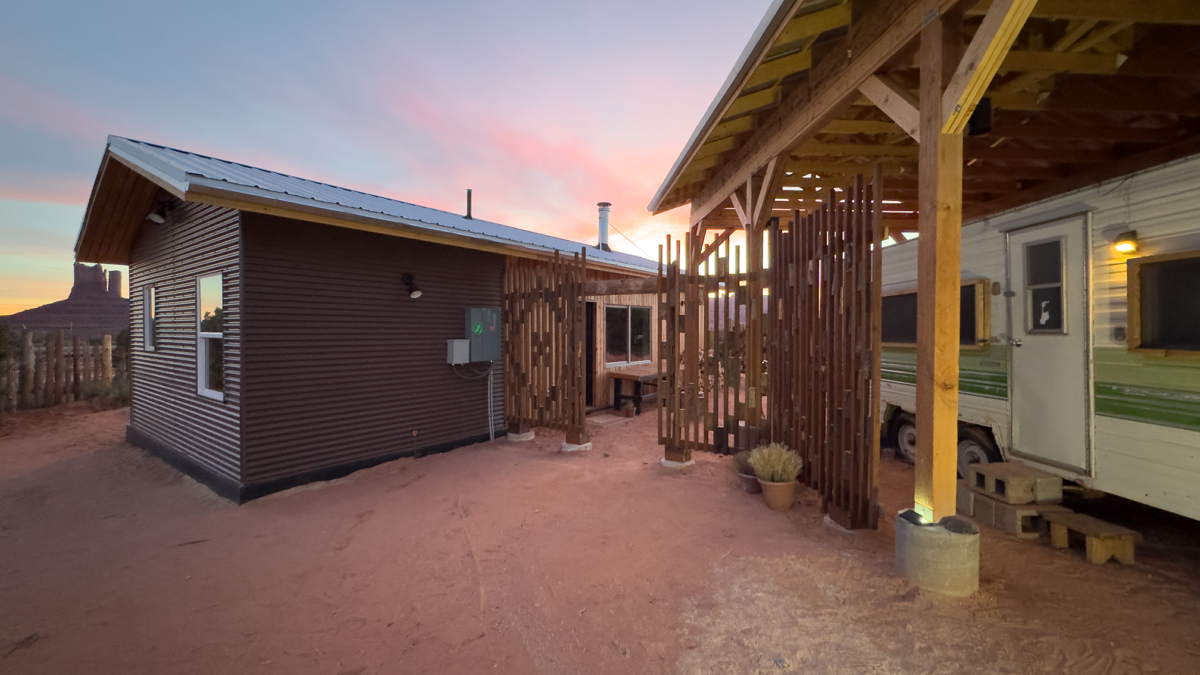
Completion of “Kinform – K’é éí hólǫ́” house
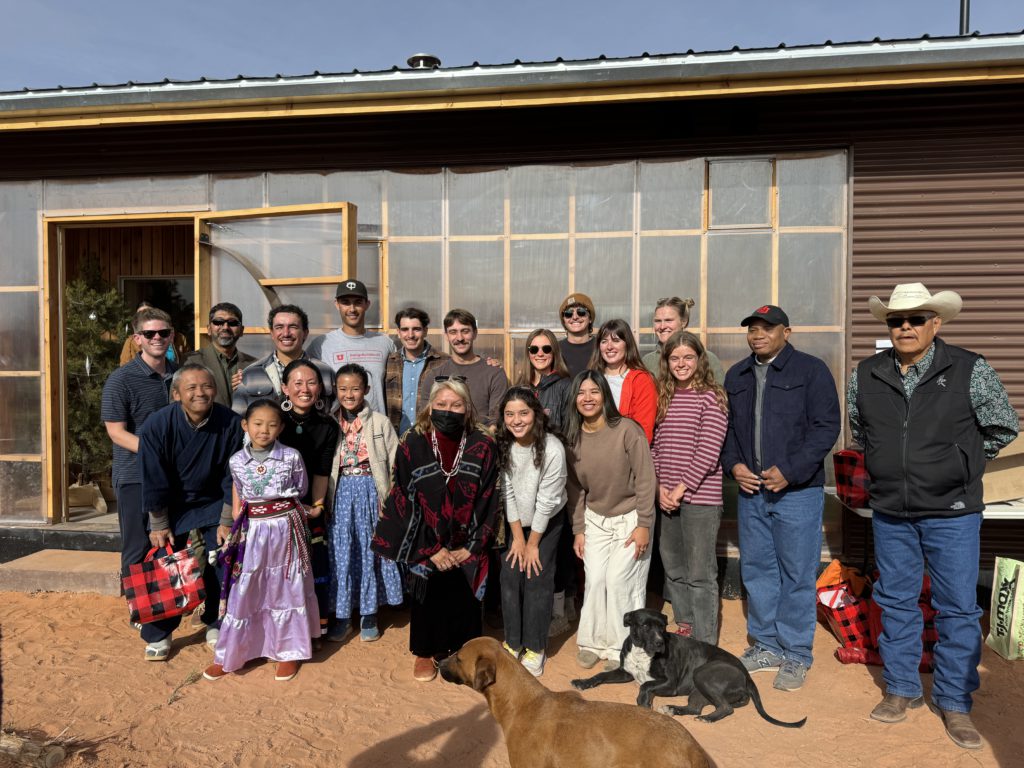
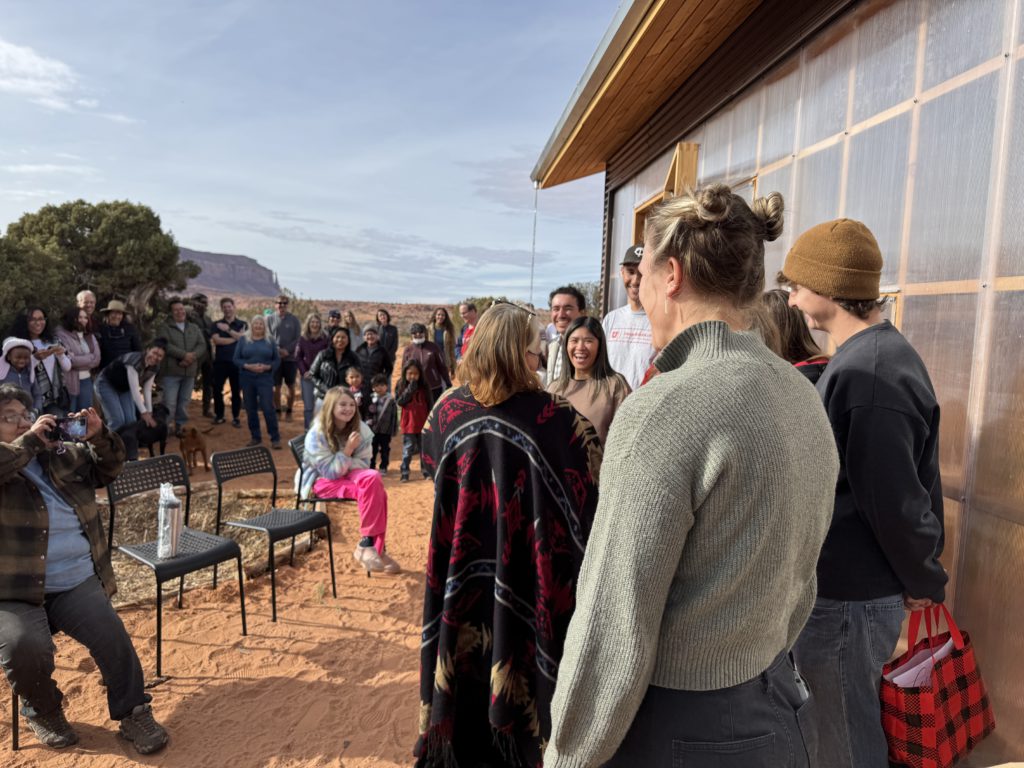
We are honored to reveal the newest residential project from 2025 DBU@Bluff. This year, 11 students dedicated two semesters (design in the summer and construction in the fall) to successfully complete a home named “Kinform – K’é éí hólǫ́.” We would like to express our deepest gratitude to our donors, financial supporters, and numerous volunteers—including alumni—as well as pro bono contributors, the students’ families and friends, the Navajo Nation, the Bluff local community, and the 11 students who devoted their full efforts to this project.
The residence was designed for a single mother and her daughter, aiming to serve as a model for resilience, cultural integration, and sustainable architecture. The project focuses on creating a high-performance home that functions both off-grid and on-grid while honoring Diné (Navajo) traditions and fostering family bonds.
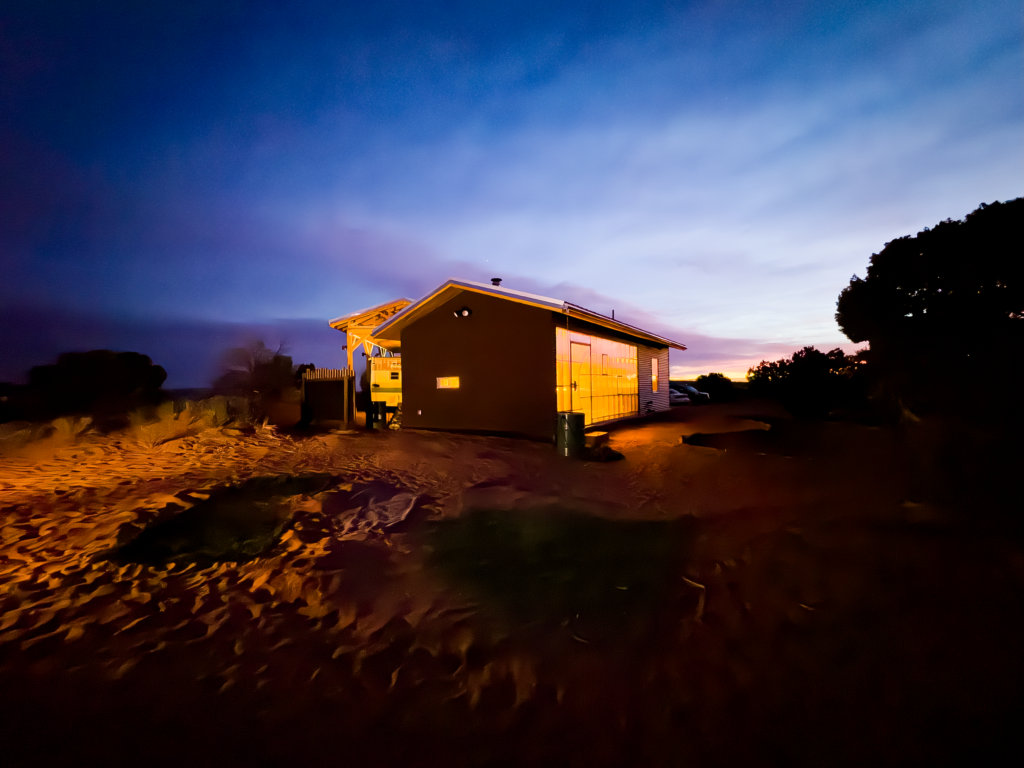
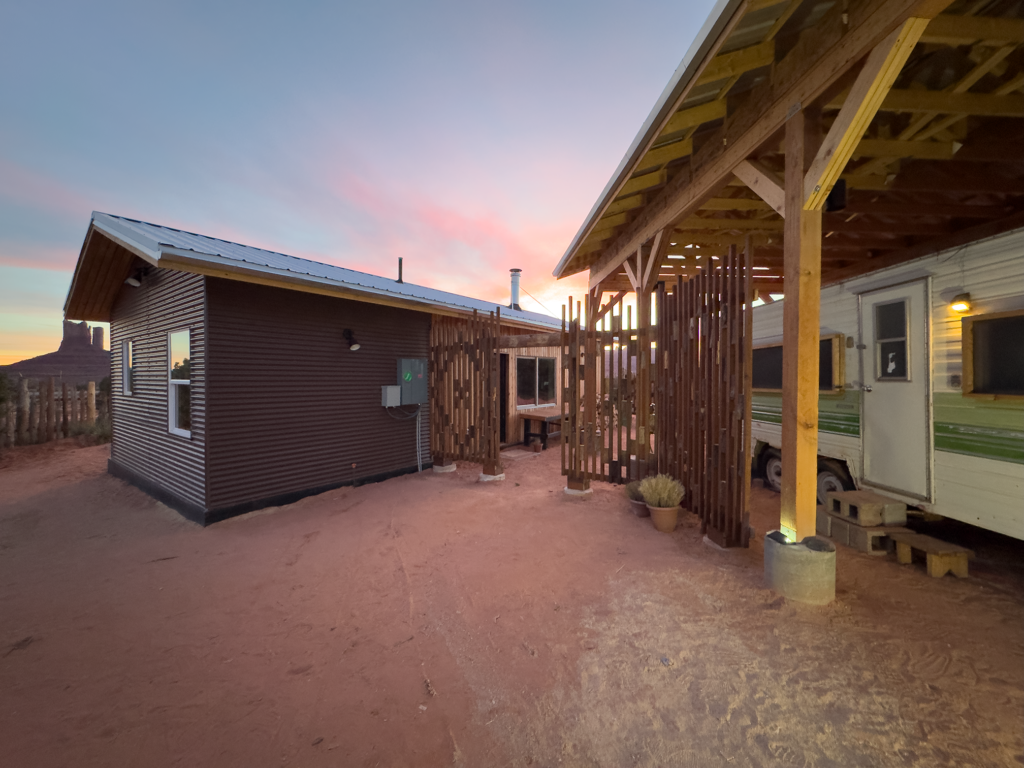
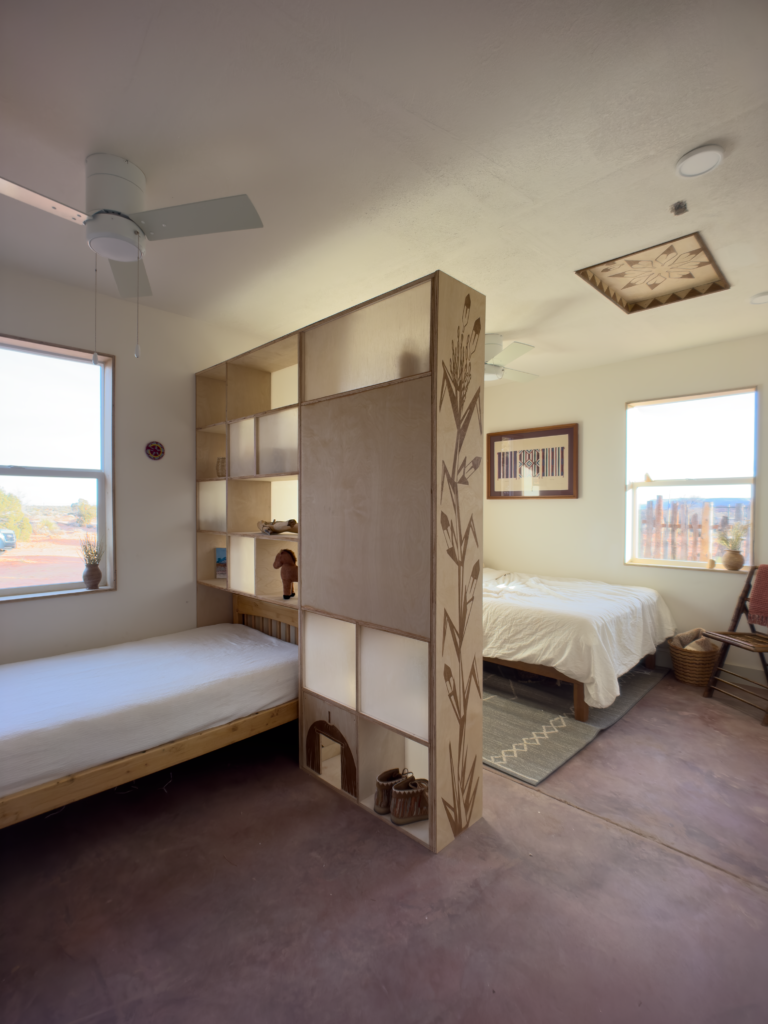
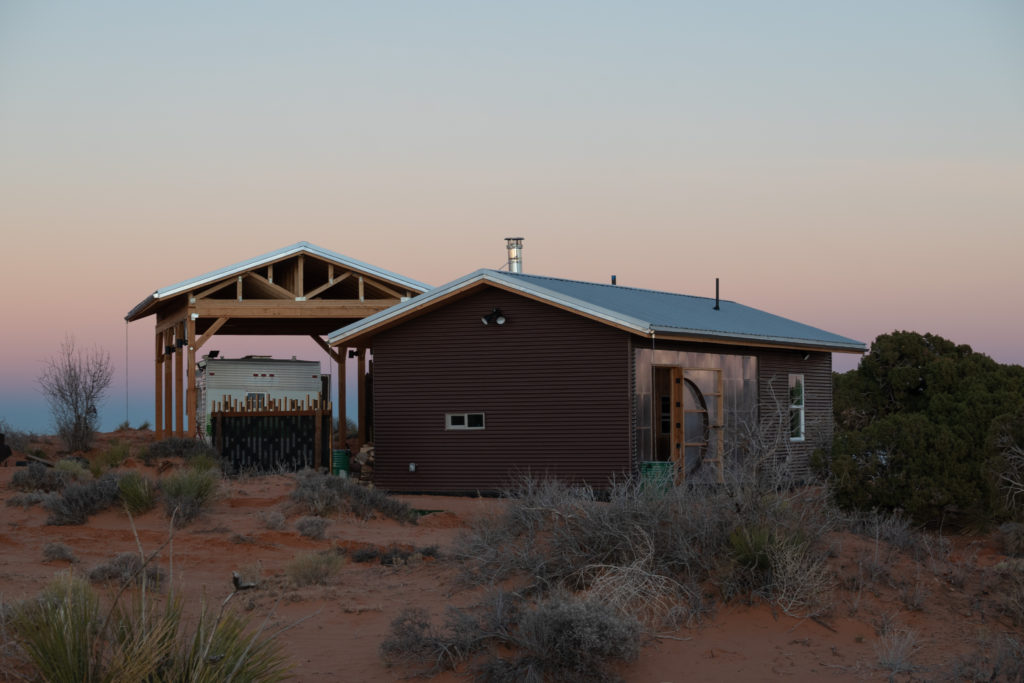
The following is an overview of the core concepts:
1. Design Philosophy
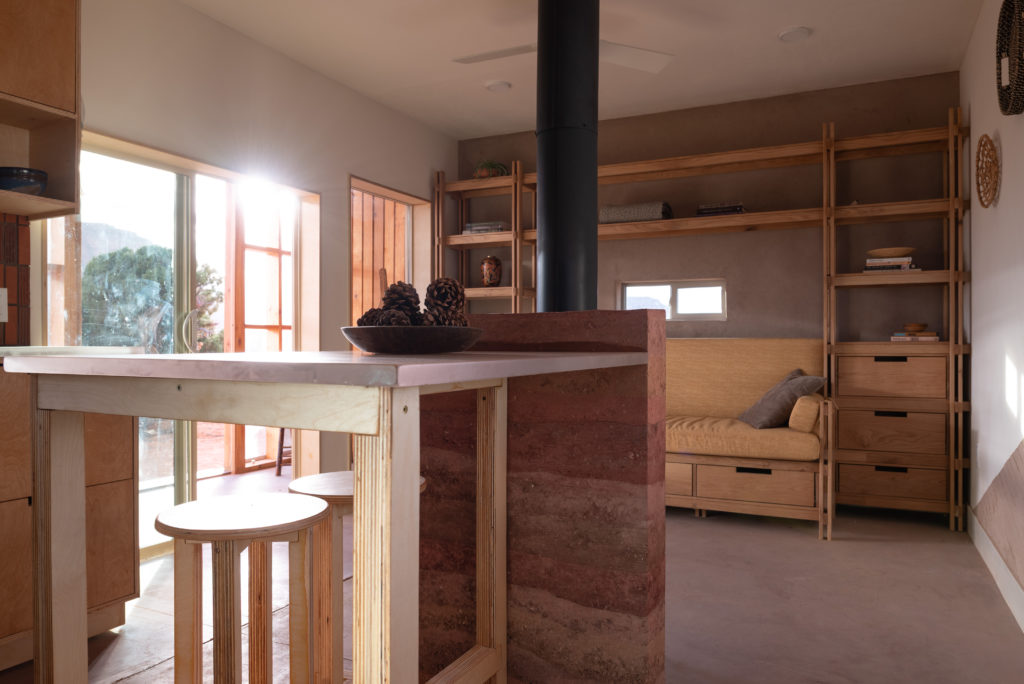
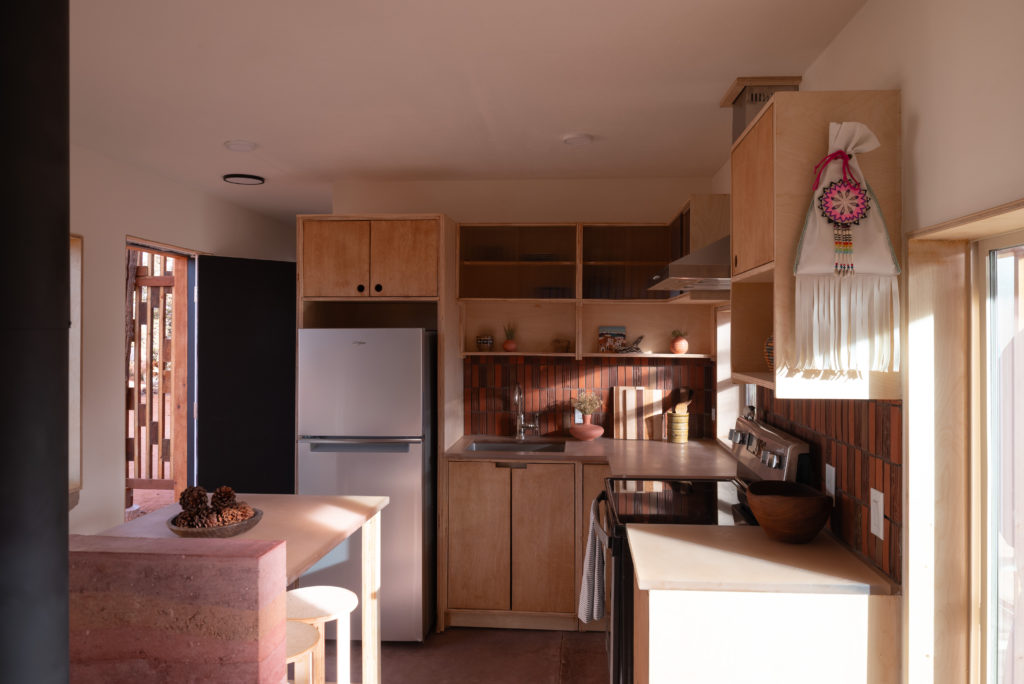
Kinship: Designed as a permanent residence for the mother and daughter to replace an inadequate mobile trailer, the structure is also built to accommodate large family gatherings. Various symbols representing family history are integrated into the design of doors, cabinets, and tiles. The natural plaster wall on the north side functions as a “solar calendar,” featuring a finish intended to record family history.
Sweat Equity: The home recipients observed and engaged with the students’ activities throughout the entire process. This helped foster an emotional attachment to the new home and a sense of long-term stewardship.
Adaptive Reuse: Rather than discarding the old trailer, the team designed a second structure to house it and restore its functionality. By focusing on the design and construction of the connecting landscape, the team maximized both the budget and the total floor area of the residence.
2. Sustainability and Passive Performance (The home is designed to maintain habitable temperatures year-round without relying on mechanical systems.)
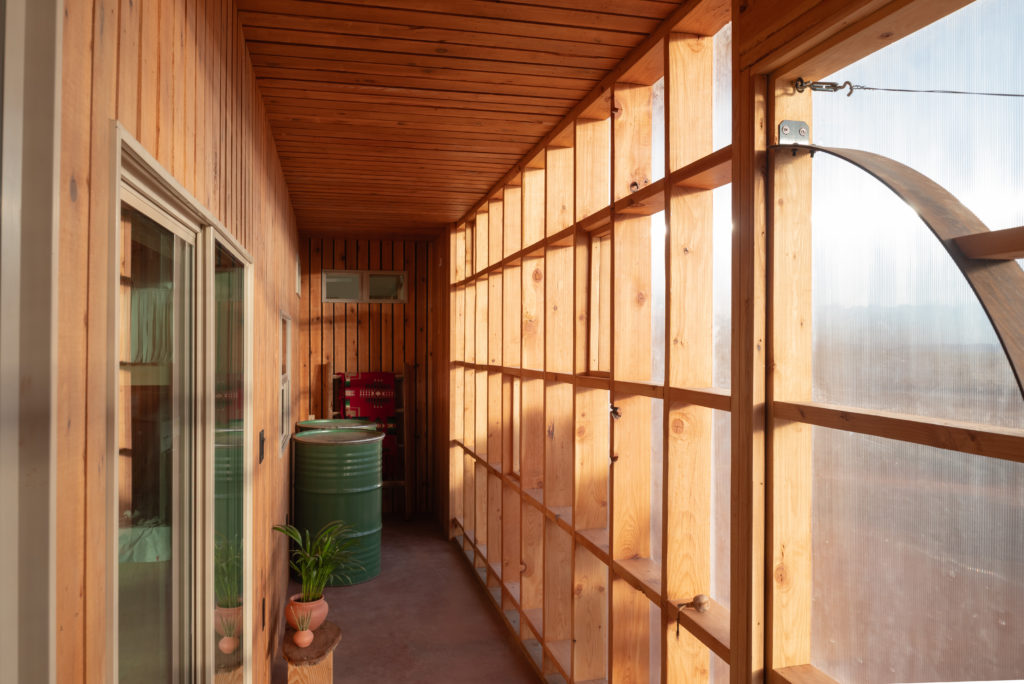
Engawa: (Japanese Concept): A south-facing, glass-like buffer zone utilizing polycarbonate panels. It functions as a greenhouse to trap heat in the winter and provides ventilation and shade during the summer.
Thermal Mass: Large barrels filled with water located in the engawa absorb heat during the day and release it at night to stabilize internal temperatures.
Passive Solar: The house is oriented along an east-west axis, with south-facing windows maximized to capture winter sunlight.
Space Efficiency: The new residential wing is approximately 570 sq. ft. Although compact, it is designed for the comfort of two people, ensuring individual privacy and providing ample storage through high-quality cabinetry installed throughout the house, particularly in the bedrooms.
Airflow: Specific gaps provided in the roof soffits and ridge allow for the natural exhaust of hot air during the summer months.
3. Innovative Material Use (The selection of materials balances traditional techniques with modern durability.)
Raw Materials: Beyond the construction site, students had the opportunity to learn about local history, ruins, and landscapes during their stay in Bluff. Based on these insights, they used gathered raw materials for the architectural finishes.
Natural Plaster: Using sand collected on-site, the team created walls with excellent breathability and humidity-regulating properties.
Handmade Tiles: Tiles were handcrafted one by one using soil collected in Bluff.
Lamp Shade: In collaboration with the MDD team, 3D-printed lamp shades were created using local Bluff soil.
Landscape Fence: The cedar wood used for the fence was repurposed from local materials and designed into cultural symbols. This created a fence that matches the surrounding landscape while protecting the residents’ privacy.
High-Tech Foundation: By using Insulated Concrete Forms (ICF), the project achieved a superior thermal barrier and structural stability without the need for heavy machinery. Construction at DBU@Bluff generally avoids heavy or specialized equipment, focusing on residential designs and construction methods that are replicable by anyone.
4. Off-Grid Resilience (Since connecting to public infrastructure can take time on the Navajo Nation, this home is “future-proofed.”)
Water: Custom gutters collect rainwater into barrels for irrigation and livestock. Additionally, greywater from the sinks is diverted to the south garden.
Power: A “Goal Zero” transfer switch allows the home to operate via portable batteries or generators even before it is connected to the electrical grid. Heating and Cooling: The design employs natural cross-ventilation strategies and a centrally located wood stove, reminiscent of a traditional Hogan’s hearth.