K'e ei holoh House
Land Acknowledgement
Welcome to Kinform / K’é éí hólǫ́ House. This house is part of the Navajo Nation. The students of DesignBuildUTAH@Bluff recognize that many of us here today are settlers occupying Indigenous lands. We acknowledge the traditional, ancestral, and contemporary lands of the Hopi, Diné (Navajo), Ute Mountain Ute, Ute, Rio Grande Pueblo people, and other traditional Indigenous peoples of this land we call Bluff, and we express our gratitude for their stewardship and care of this land.
Design Concept
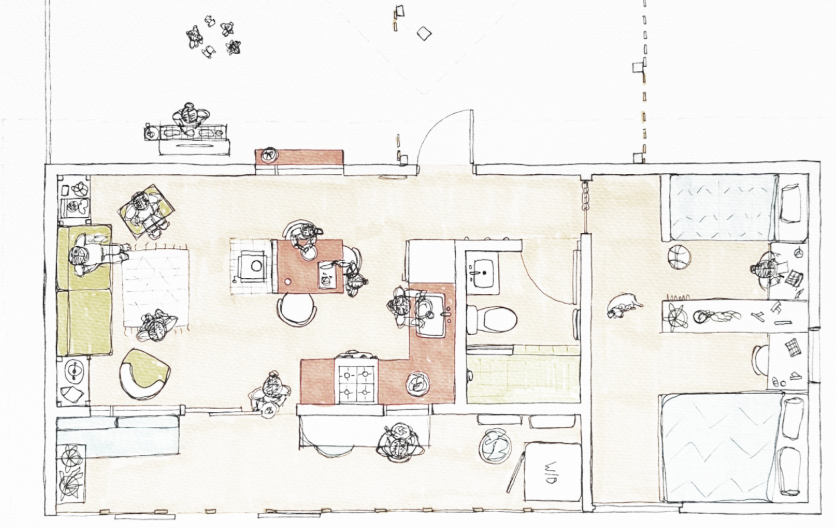
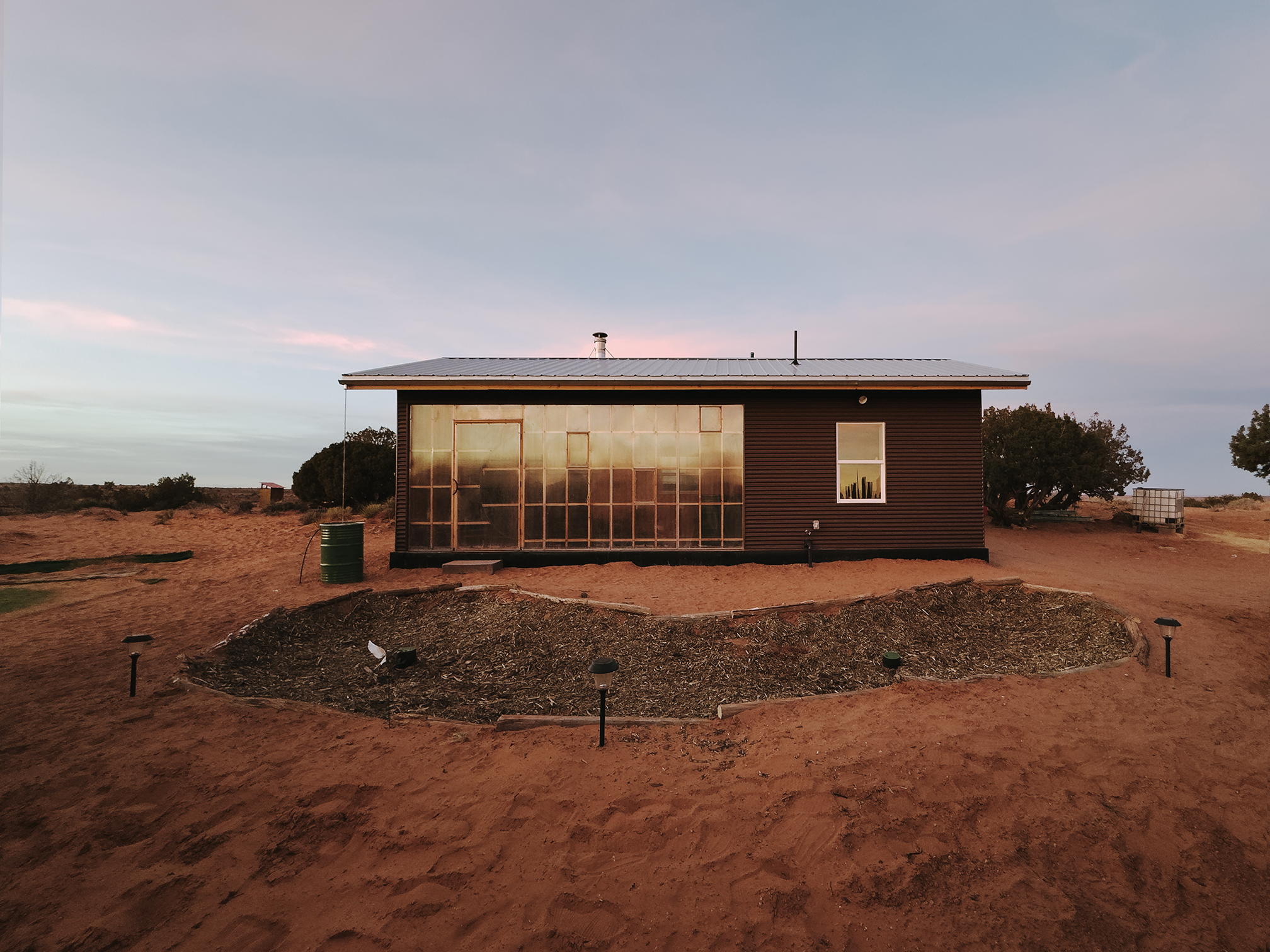
The project name "Kinform (K’é éí hólǫ́)" was inspired by the mother-daughter relationship of the clients and their "Kinship" with their extended family. The goal was to provide a living space for two people while also creating a place where relatives could gather and interact.
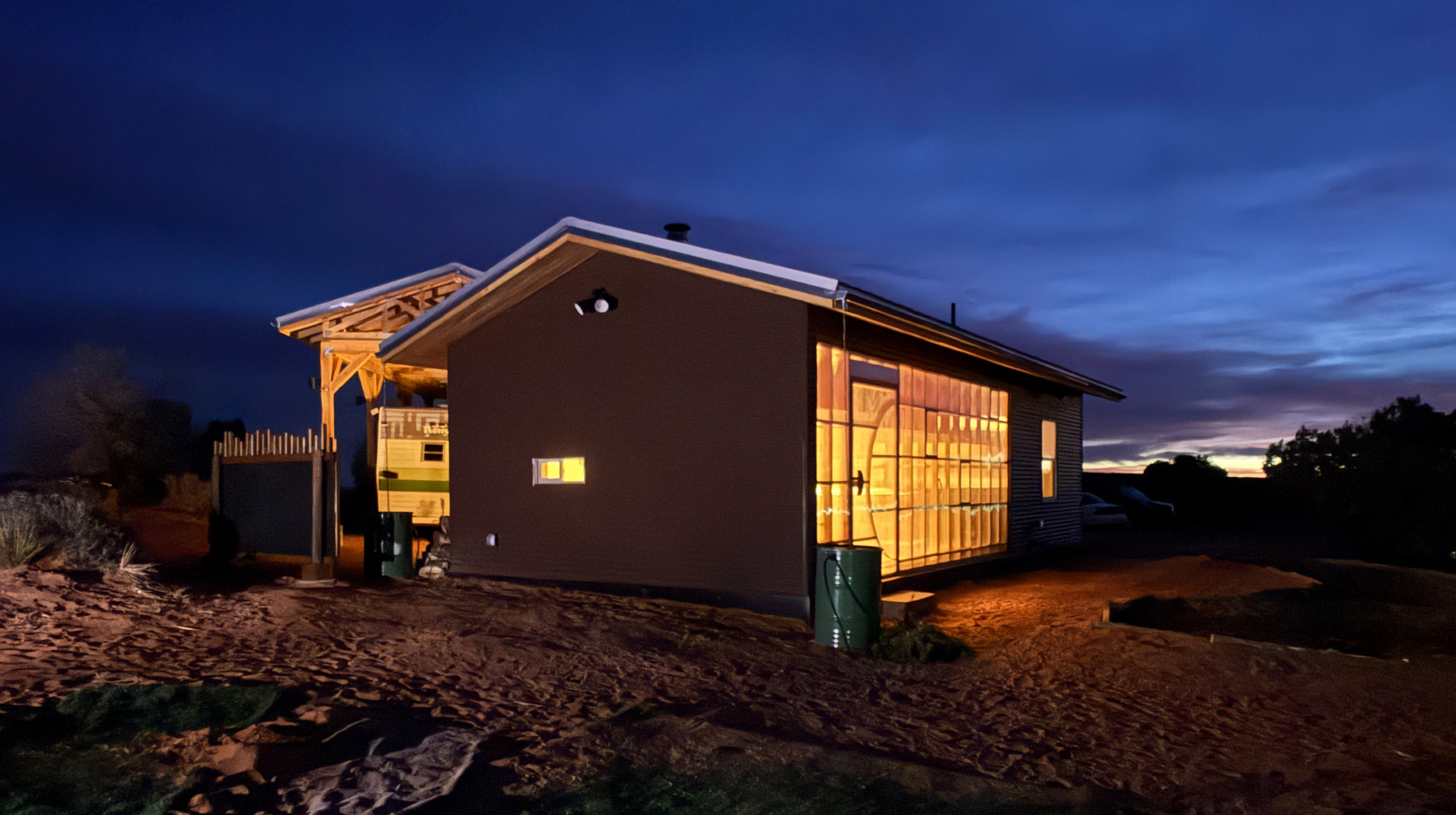
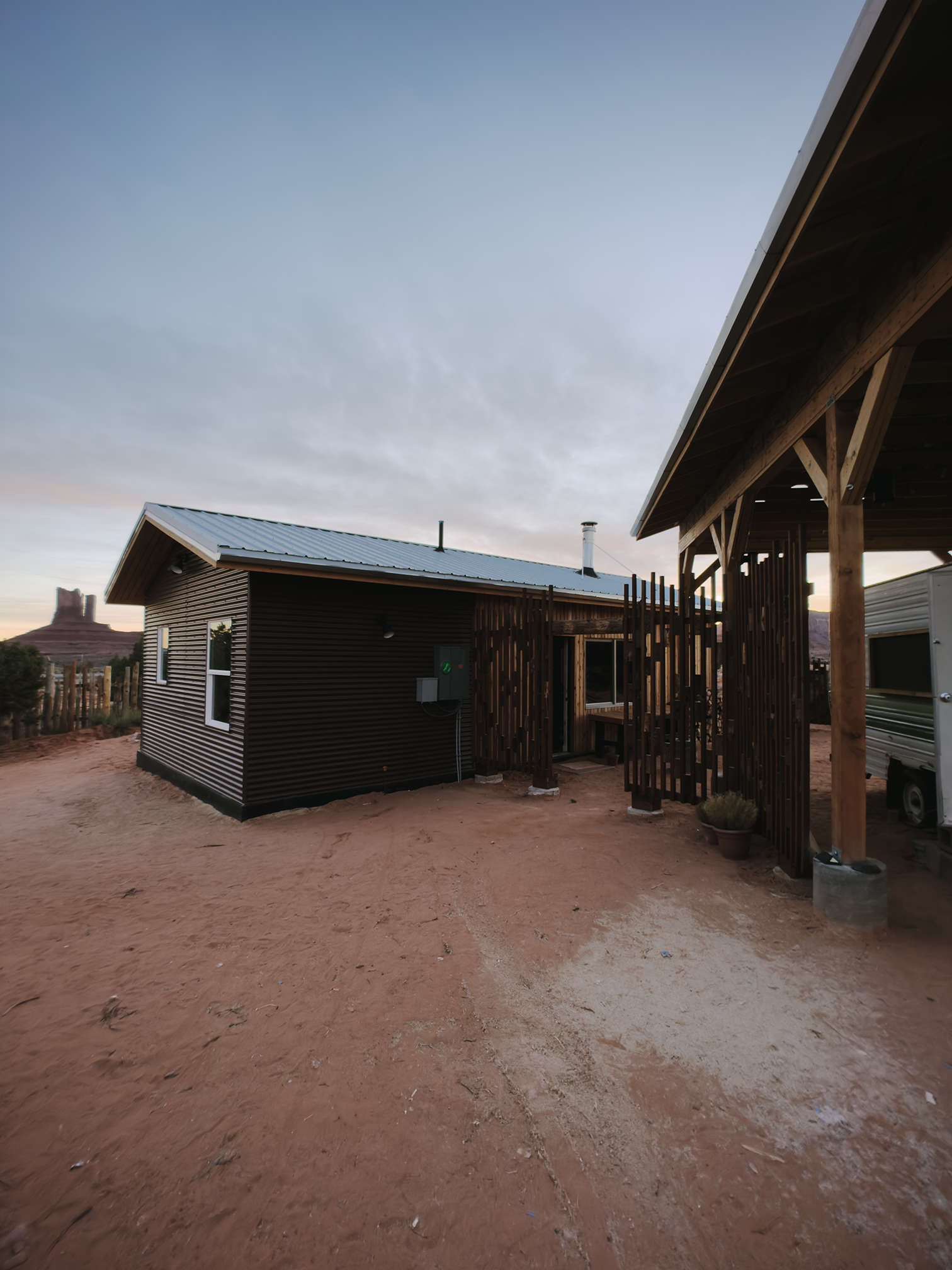
The original mobile home base had become dilapidated and could no longer provide adequate warmth or space. However, to make the maximum impact within a limited budget, we chose not to dispose of the trailer but to utilize it. By keeping the floor area of the new main living building to 560 square feet to save budget, we created a second structure (roof) to cover the trailer and restore its function.
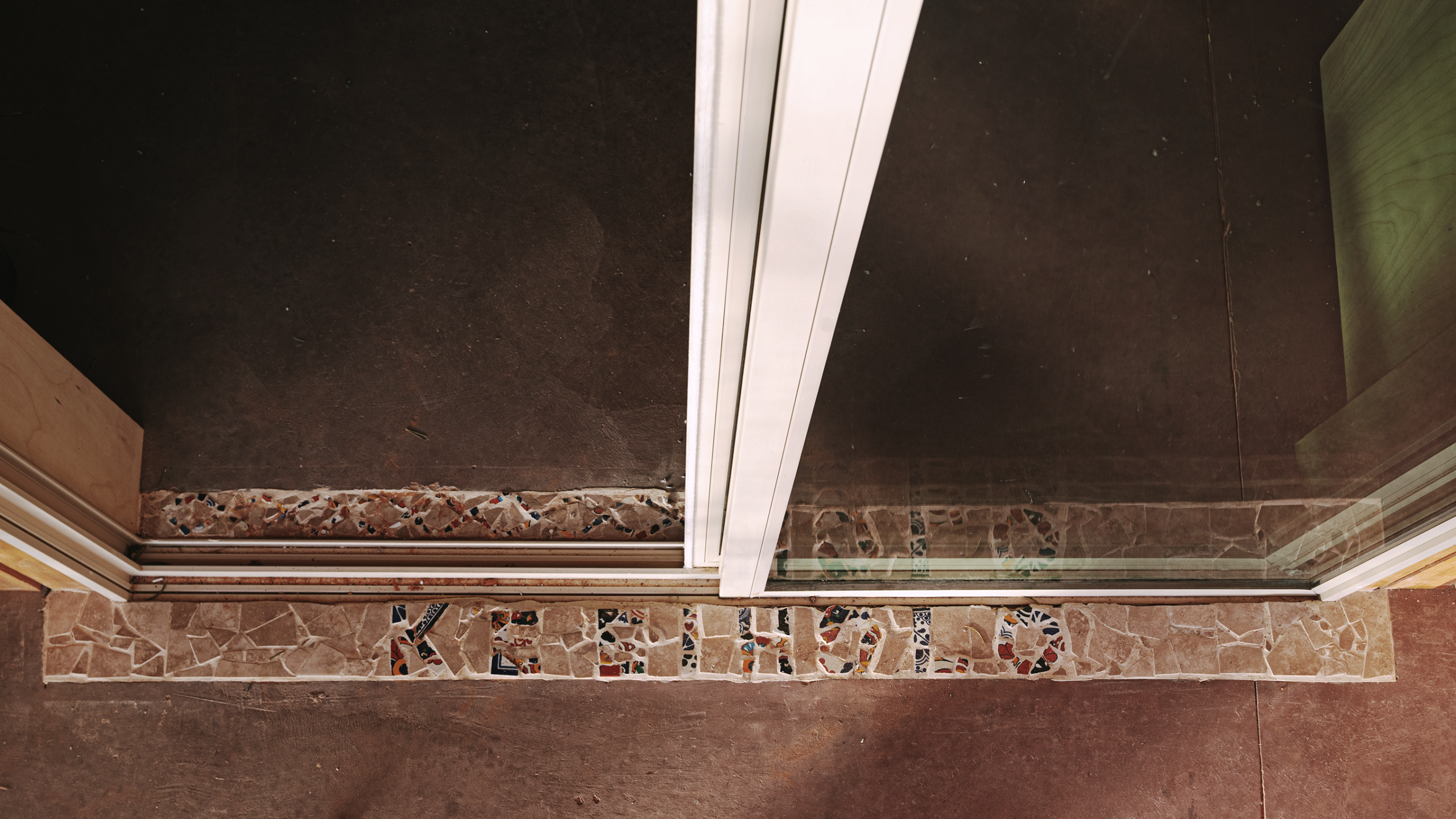
Connecting these two structures is an outdoor gathering space that incorporates the Diné (Navajo) traditional culture of an east-facing entrance, as well as traditional patterns and materials.
Sustainability & Features
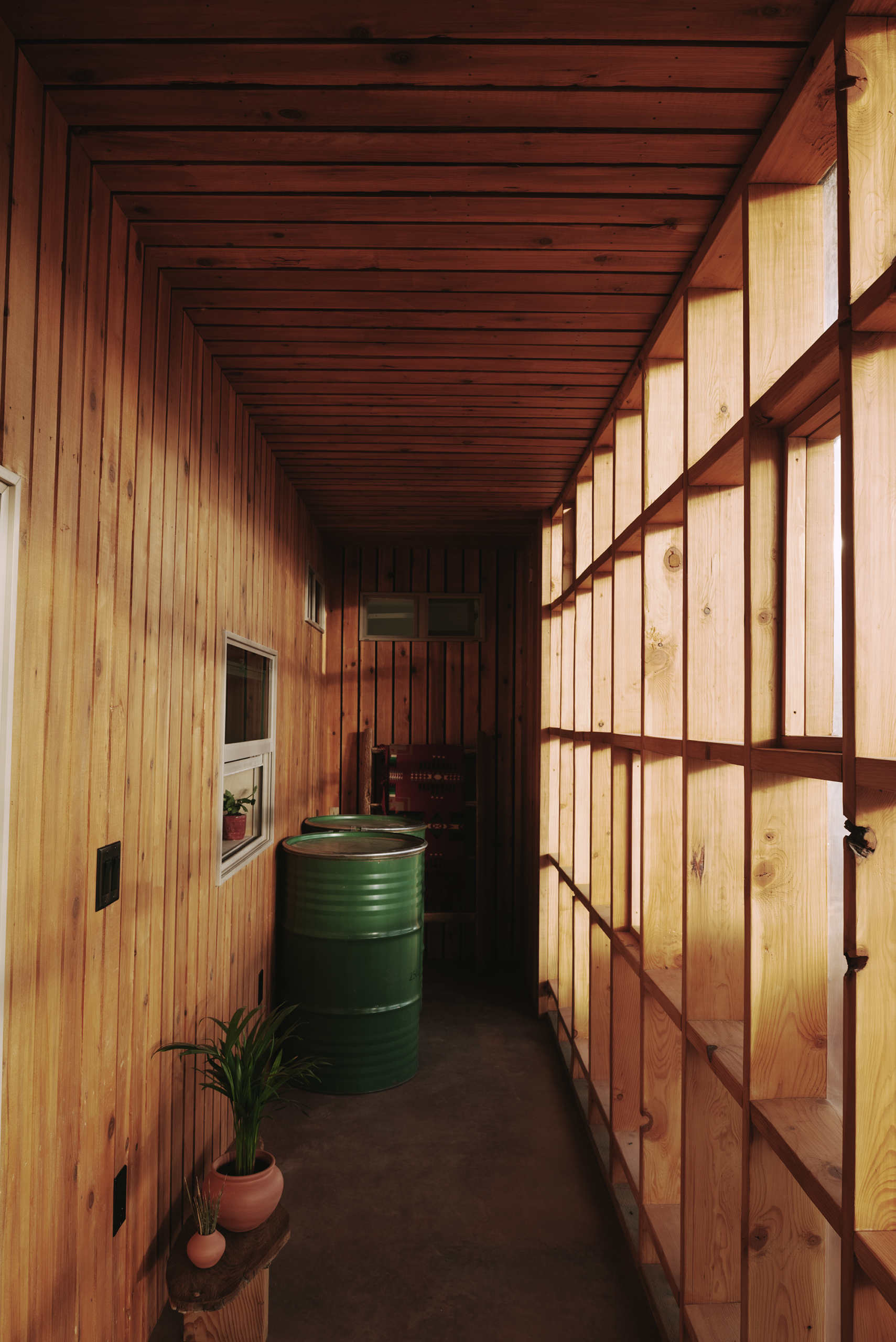
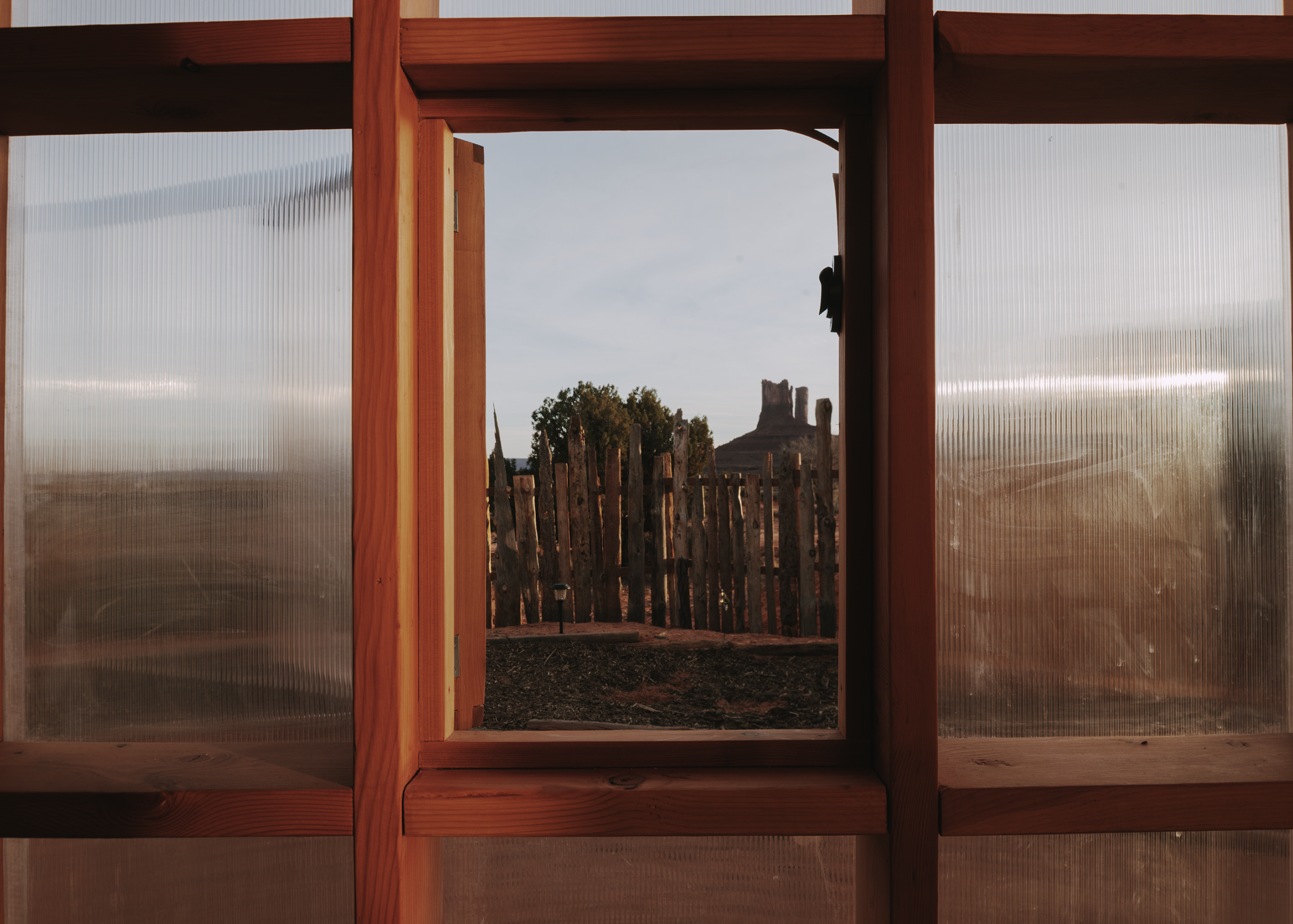
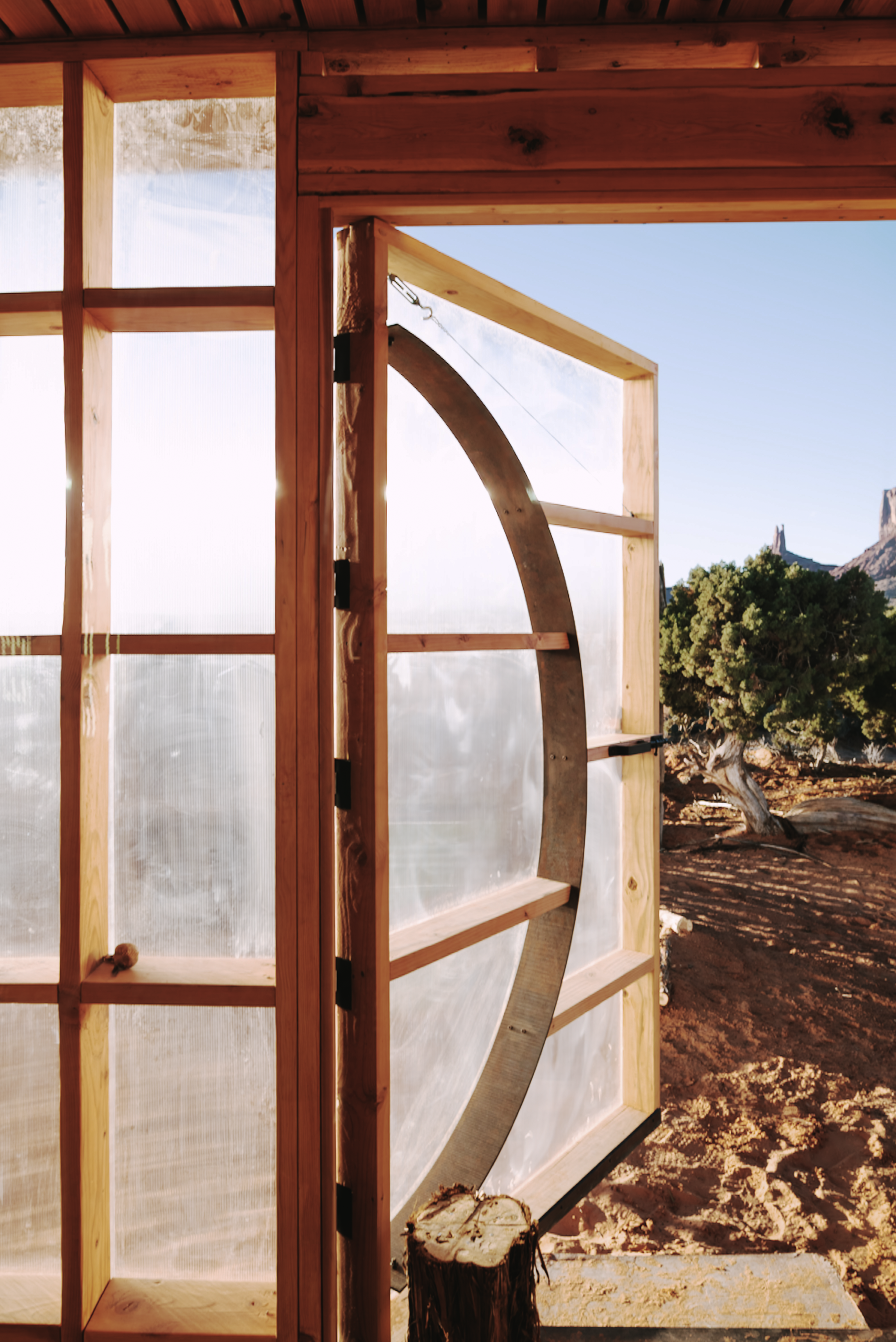
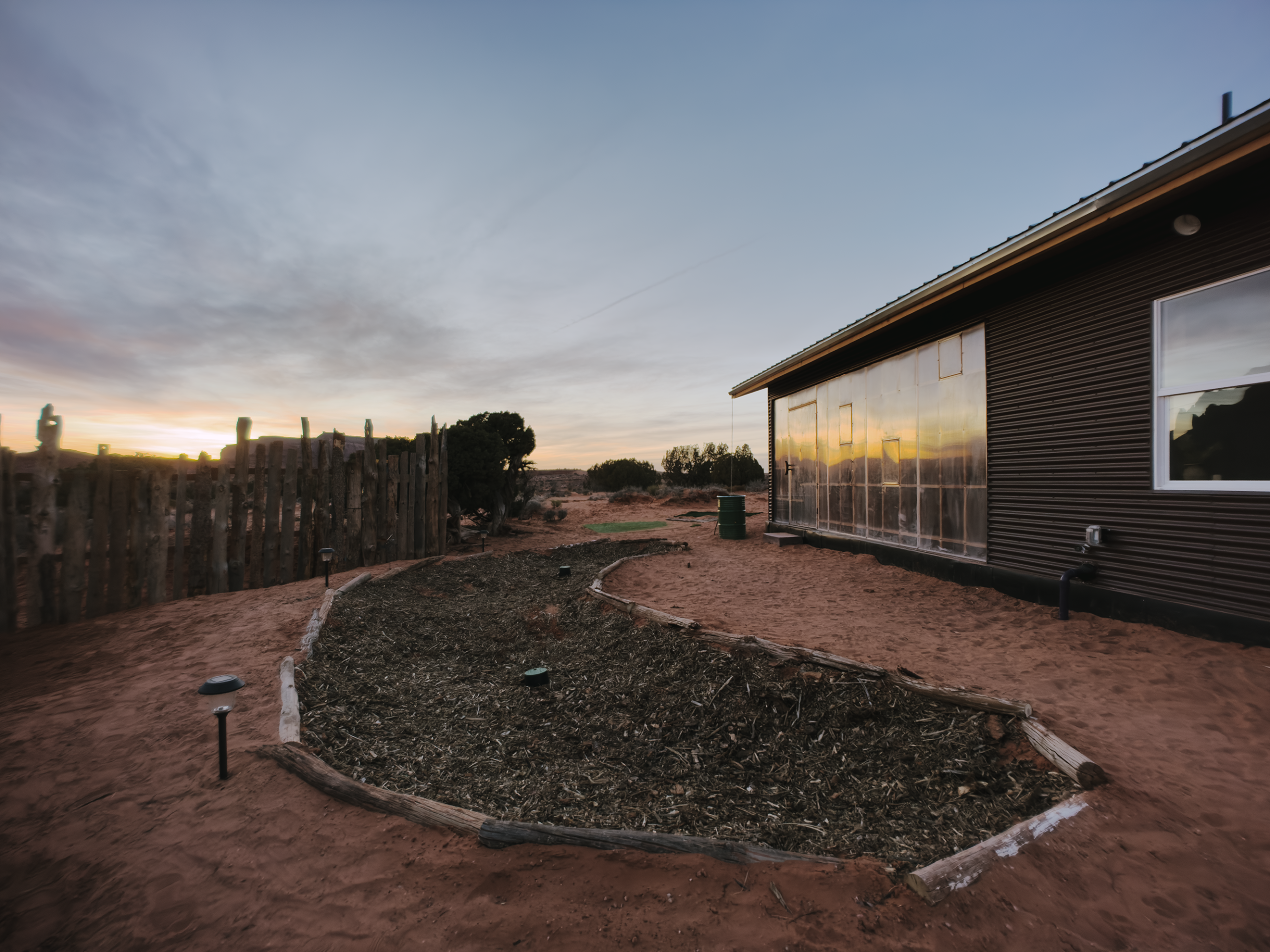
- Engawa : We incorporated the Japanese architectural element of "Engawa" to function as a "transitional space" between the interior and exterior. This long, narrow space facing south acts as passive solar heating in the winter, capturing low-angle sunlight and sending warmed air indoors. In the summer, windows can be opened to promote ventilation and keep the living space cool. Utilizing polycarbonate panels and cedar wood, it also functions as a space for family gatherings.
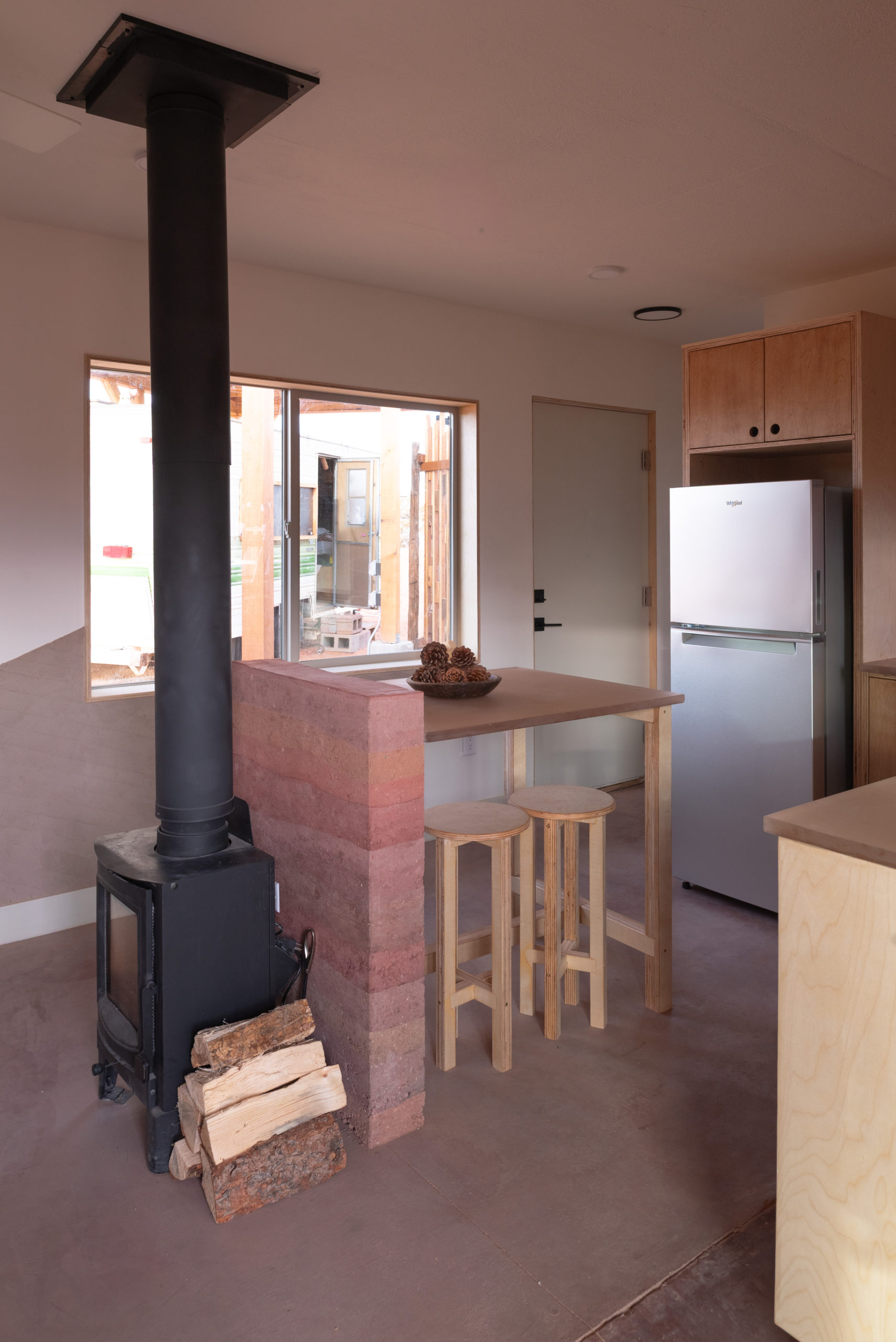
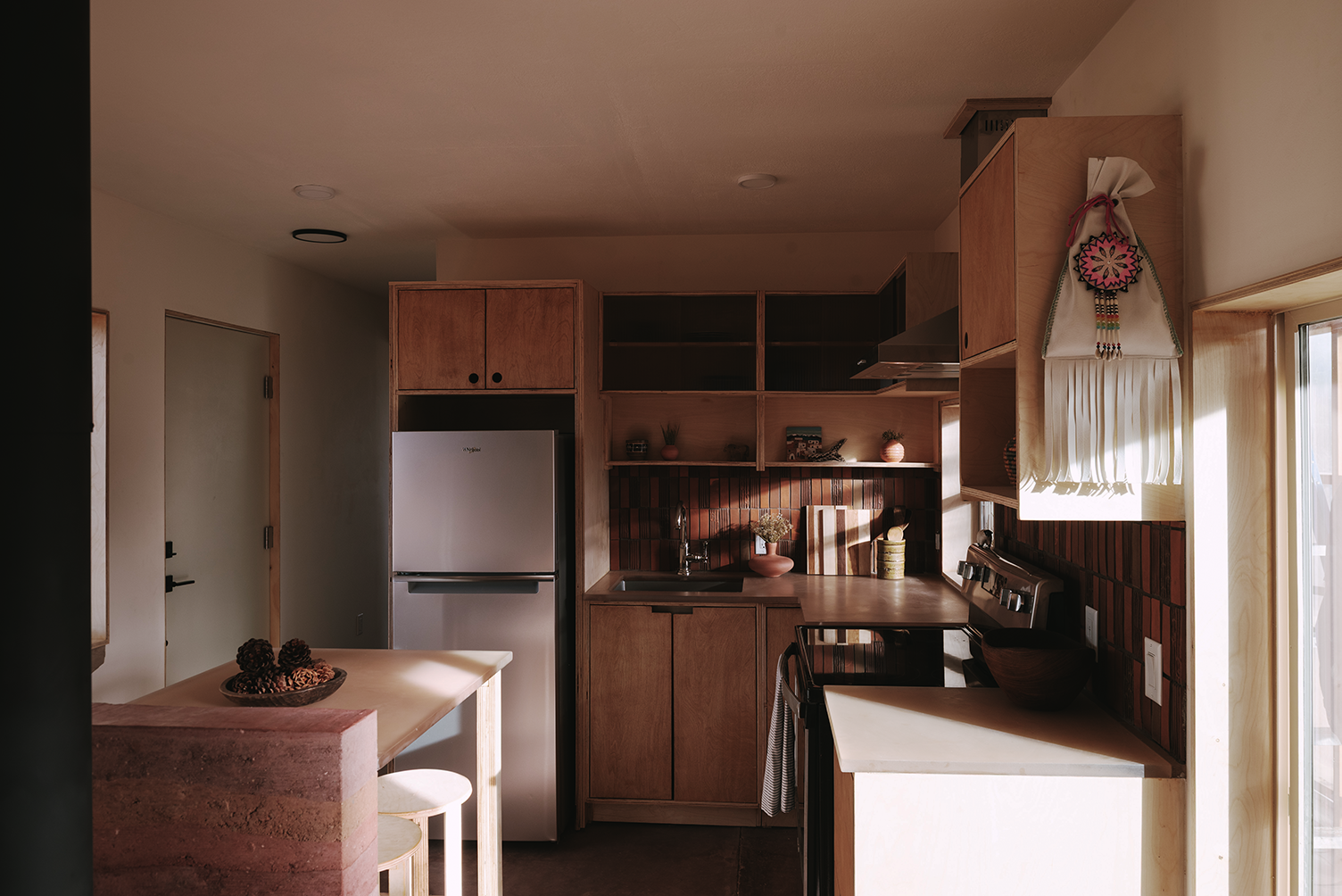
- Rammed Earth: Behind the wood stove, a Rammed Earth wall was installed as a non-combustible heat shield. Inspired by previous projects, this ensures safety while also serving as a symbolic artwork in the center of the living space.
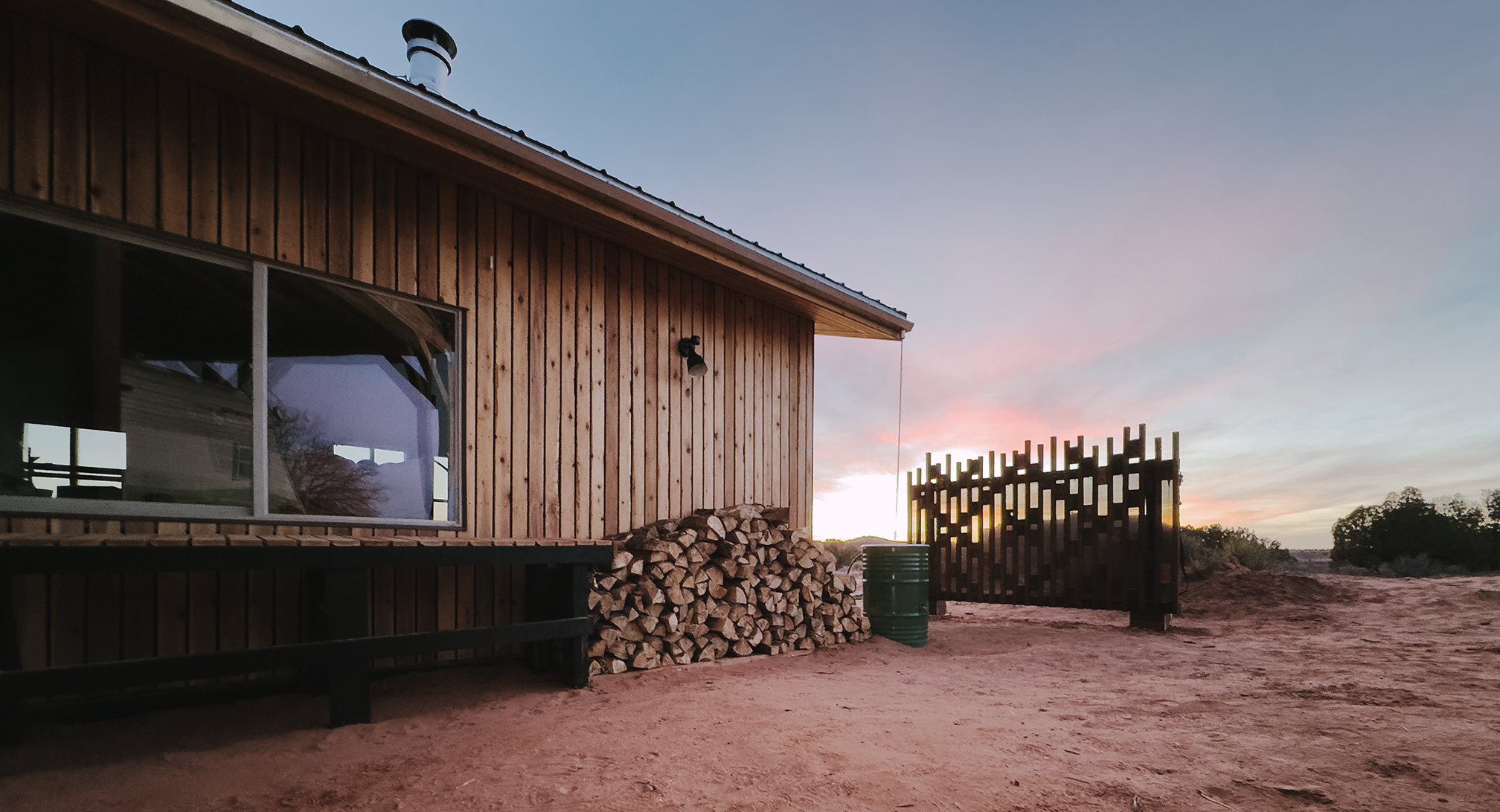
- Water Catchment: Rainwater from the roof is collected through custom gutters and stored in two 50-gallon rain barrels. The collected water is used for multiple purposes, such as watering plants, cleaning, and providing water for livestock.
- Materials:
- Exterior: "Coco Brown" corrugated metal siding was adopted to blend with the surrounding rocky landscape, arranged horizontally to help the building settle into the scenery. Vertical cedar siding is used on the north face to add warmth.
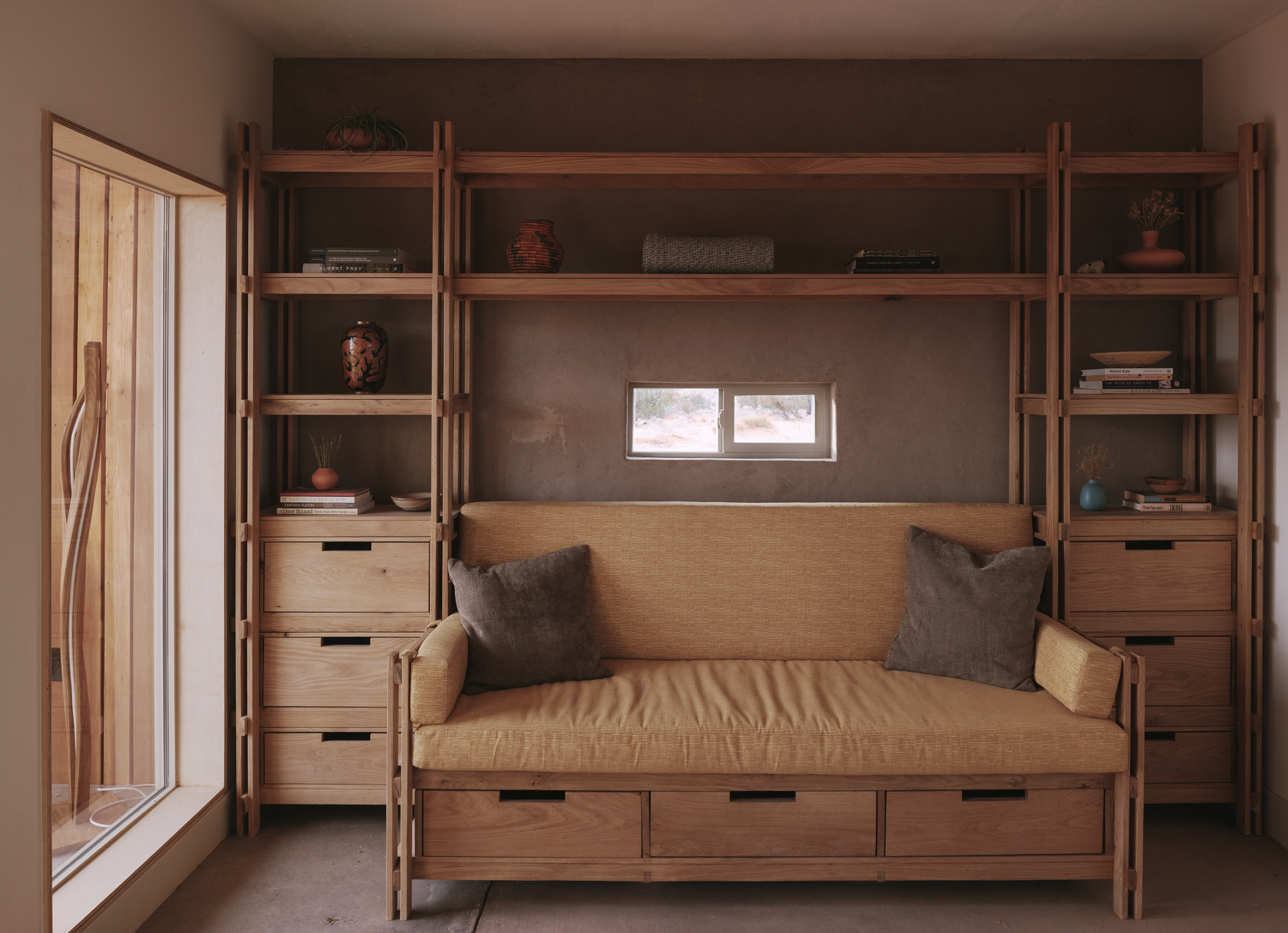
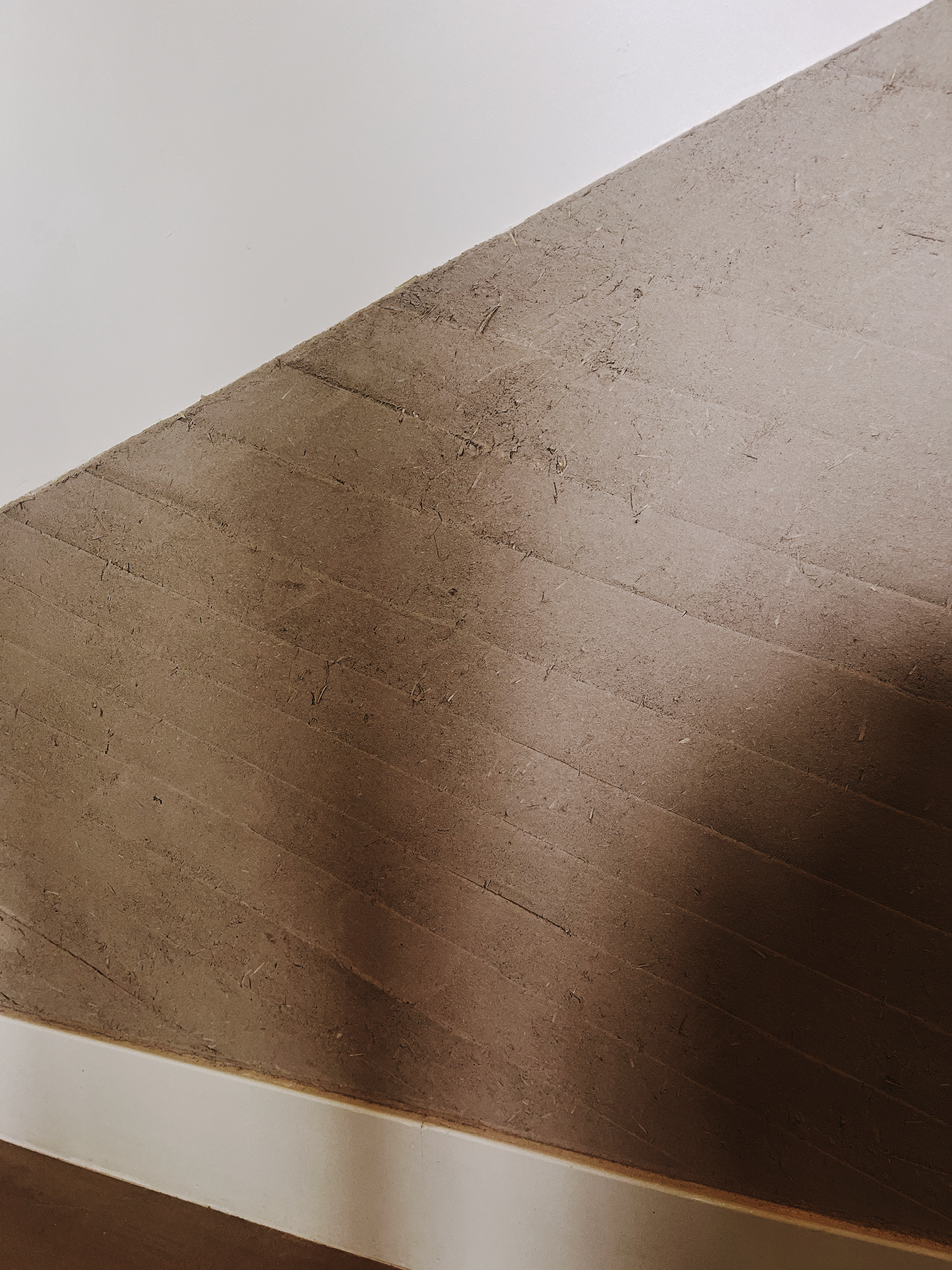
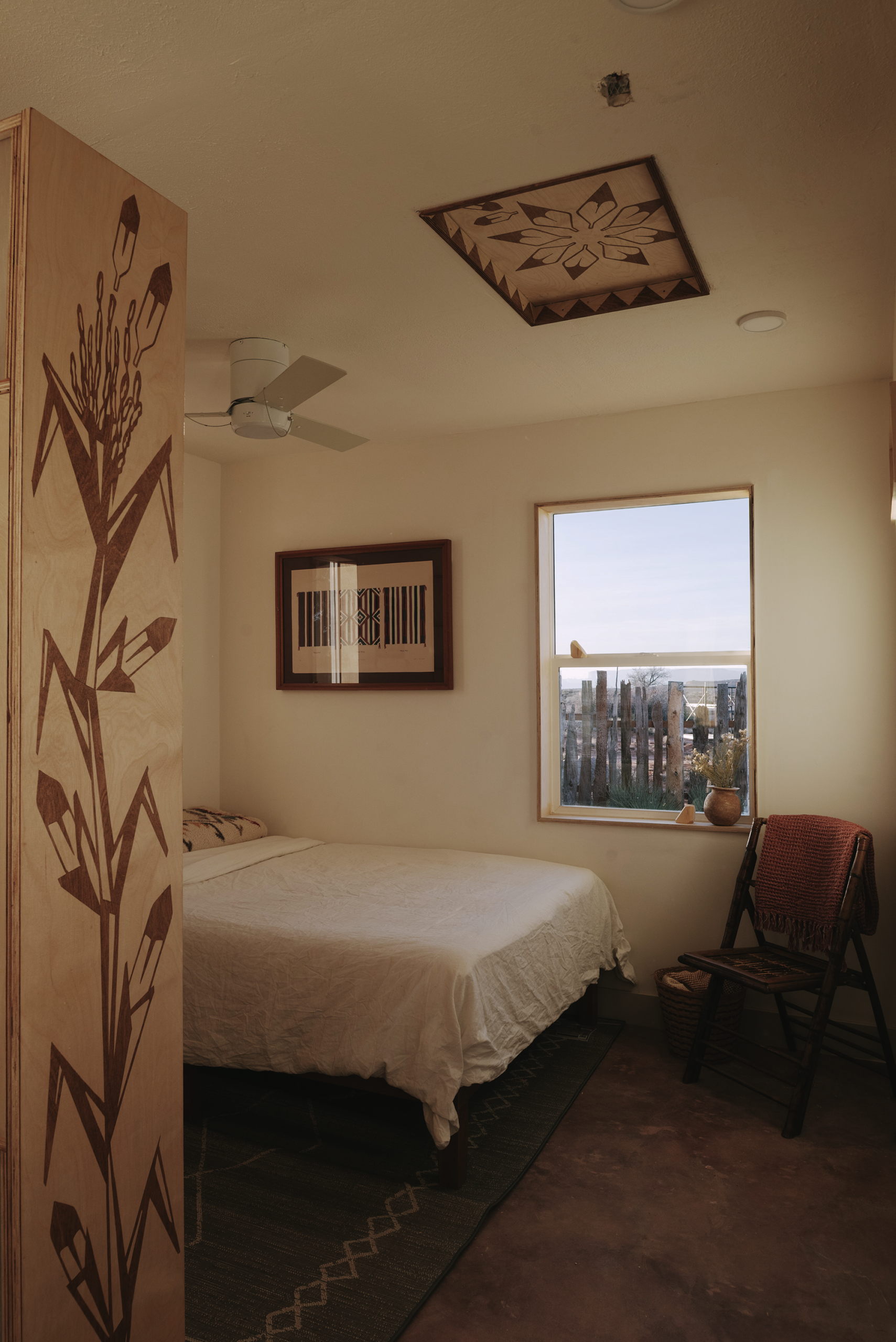
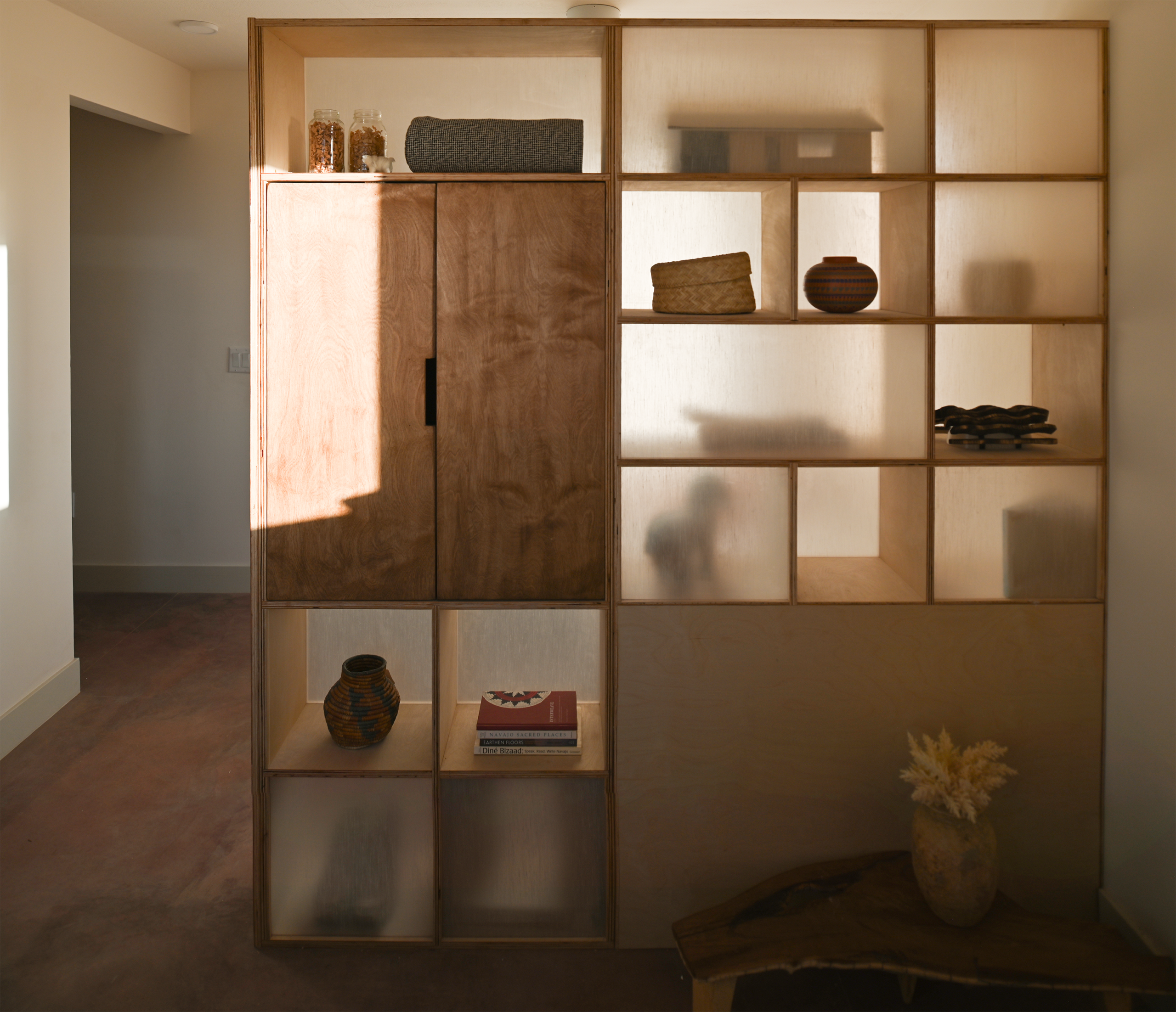
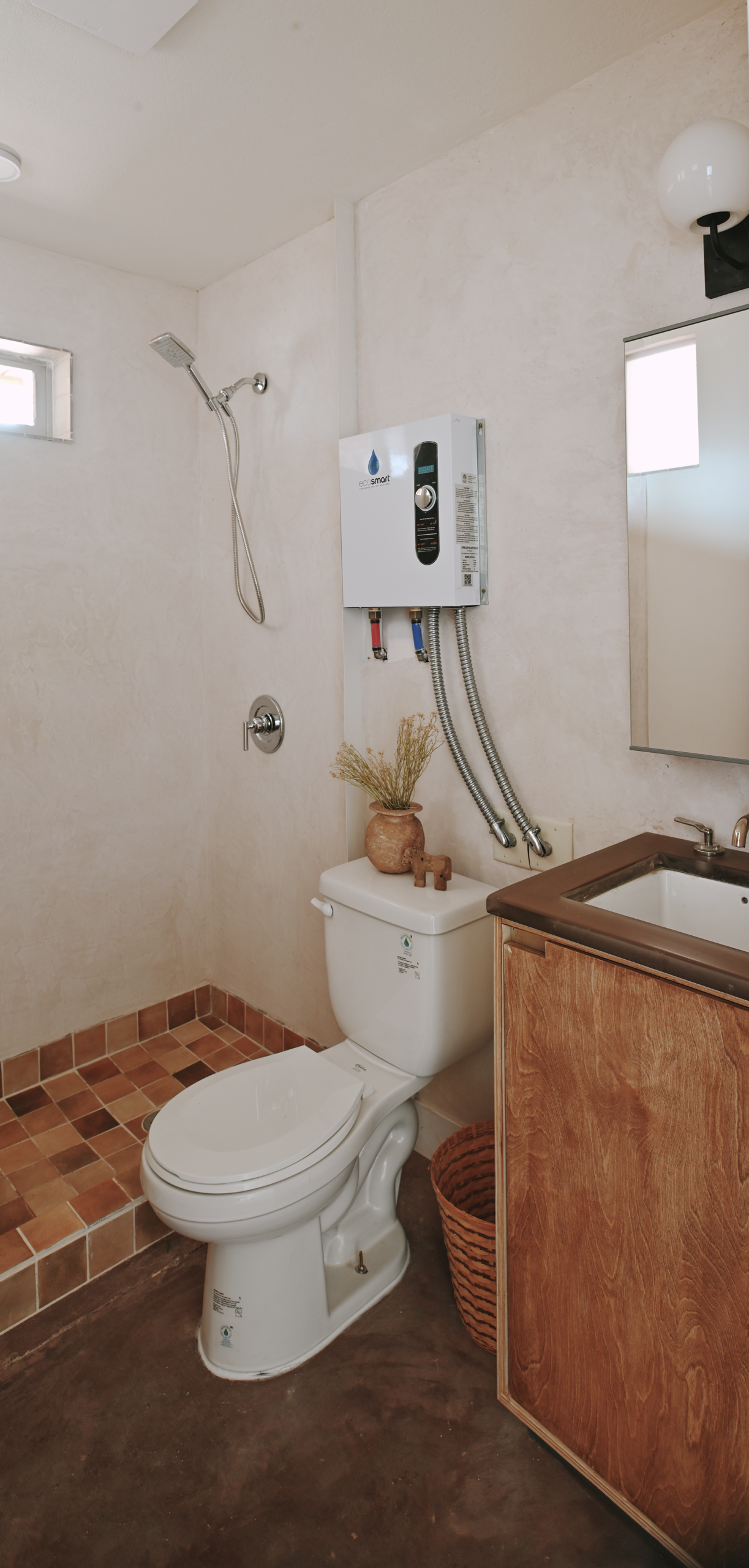
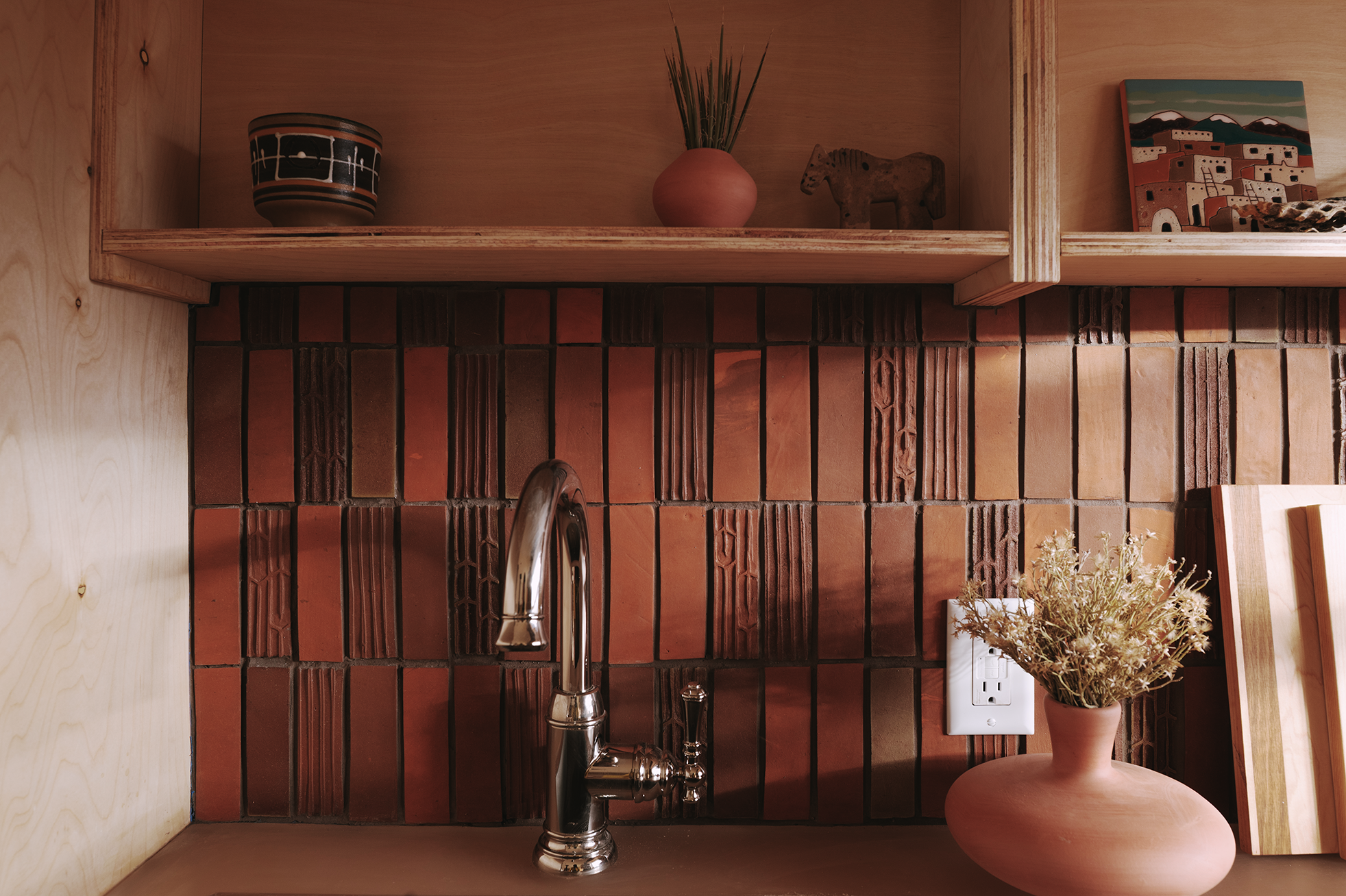
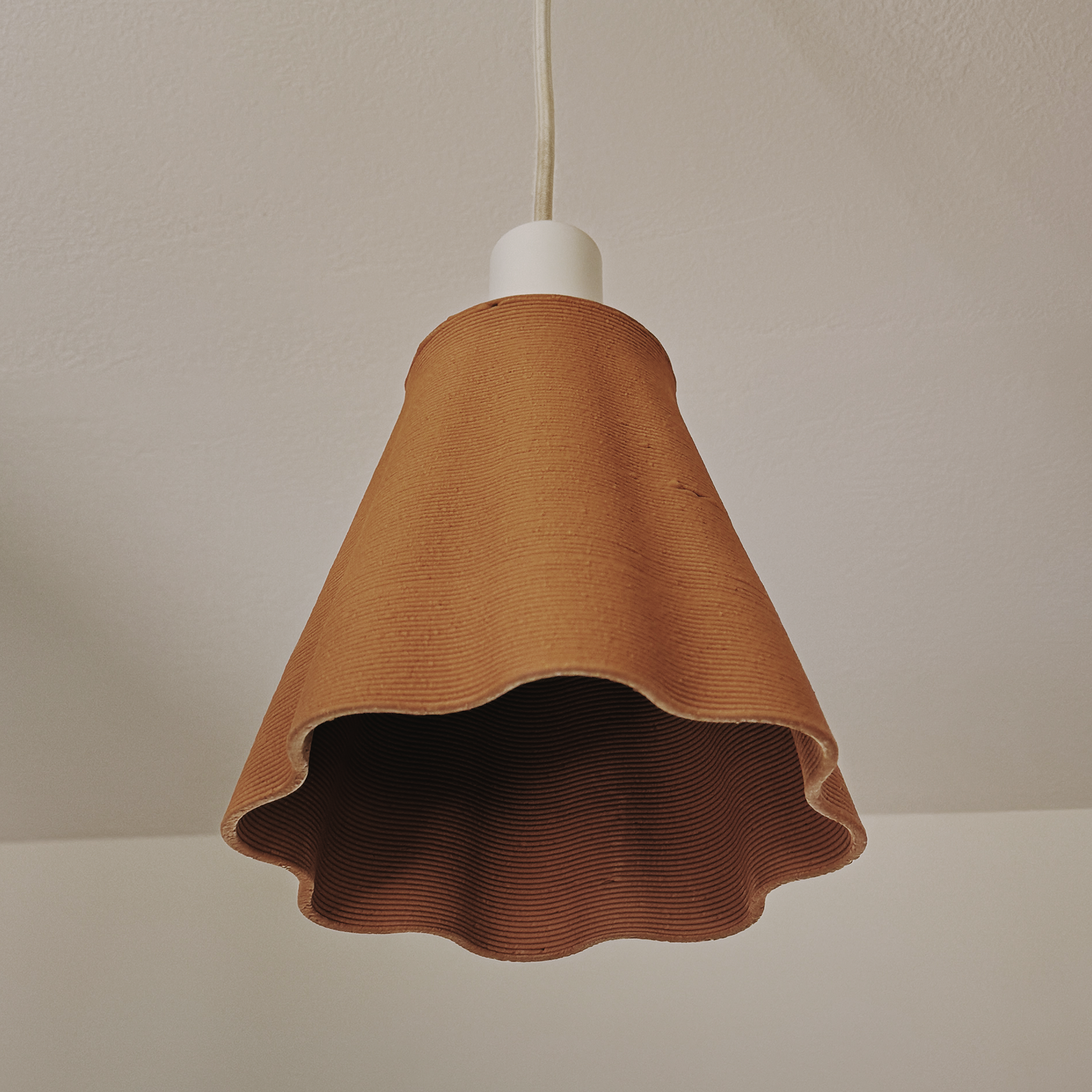
- Interior: Elements created by students from local materials are incorporated, such as natural plaster using local soil, 3D printed lighting, and handmade tiles.
Project Details
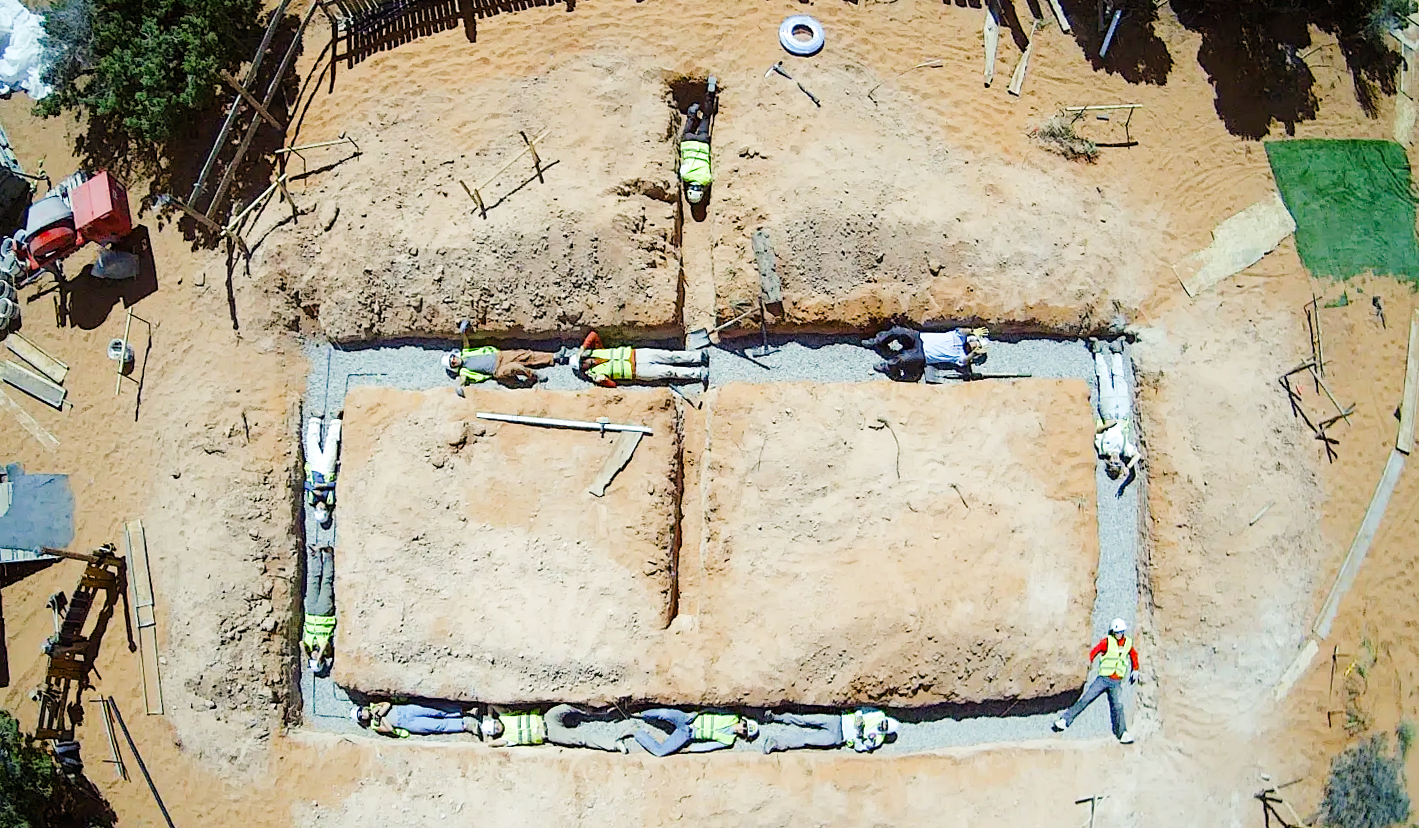
Size Main Building: 560 sqft (1BR, Kitchen, Living, Bath)
Roof Structure (for trailer): 157 sqf
Location Dinétah, Navajo Nation
Year of completion 2025
Credits
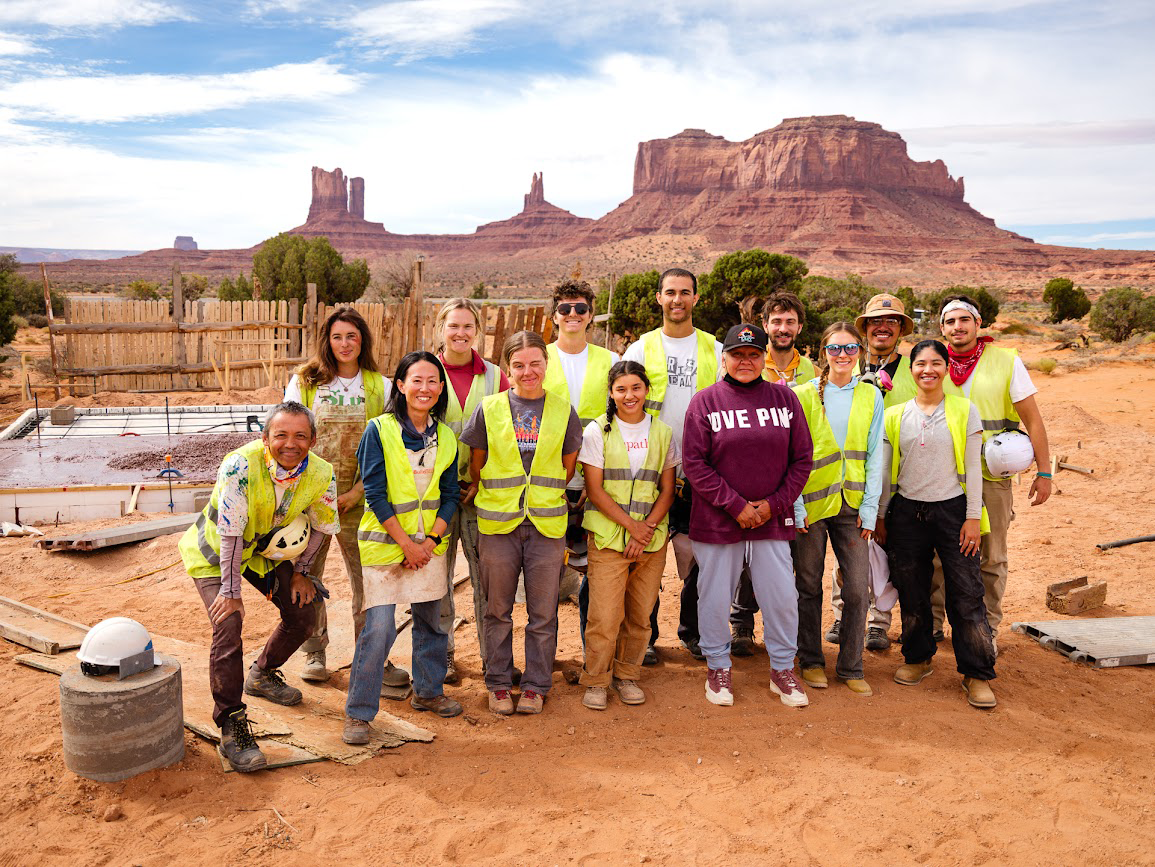
DBU@BLUFF STUDENT PARTICIPANTS Nathan Blazek, Alanah Braaksma, Chloe Coleman-Houghton, Finn Geller, Kaitlyn Jensen, Griffin Pumilia, Miguel Gonzalez, Abbie Riley, Trisha Sinamban, Thomas Stankowski, Aimee Larrabee
COLLABORATIVE RESIDENTS Christine and Martina Yazzie
CONSULTANTS John Nakai (Utah Navajo Trust Fund), construction inspector, technical supervisor
Chris Hofheins, structural engineer
PRO-BONO Electrician: Mike Riley, Canyon River Electric
Plumber: Leigh Marymor
SUB CONTRACTORS Electrician: Steve Holiday, S&S Pro construction, Harrison Electric
Backhoe Operation: James Atene
VOLUNTEERS Telluride Mountain School Alex Steckel, Louise Eutropiud, Alexander Wagner,Reid Robinson
Brandon Saavedra, Xuan Hoang, Adilene Delgado, Ashinti Clair, Weston Wright
BYU Global Engineering Outreach Club, U of U MDD Milad Mozari class, BYU family therapy) Shayne Anderson’s class, Marin and Asher Anderson, Verde Valley High School, Leah, Amya Toney, Tomoko, Shizuku and Konoha Yamamoto
DBU@B ALUMNI Sara Anderson, Ellie Velazquez, Emma Hanson, Kassandra Cobian-Gutierrez (DBU@Bluff 2024 alumni) Naren Anandh, Laurie Larson, Lacey Chun, Naomi Manning, Belinda Chau, Keaton McCargo, Lyndsey Heck (DBU@Bluff 2023) Jaden Robertson, Jolie Dunlap, Preeti Gurung(DBU@Bluff 2022)
Student family and Friends Greg and Libby Larrabee, Kayleigh Gonzalez, Lance and Stary Braaksma, Paul Geller, Denver and Edith, Laura Riley, Marc and Kathleen, Lynda and Alisha, Dawn and Mary,
FUNDING SUPPORTERS Project material: Utah Navajo Trust Fund, Navajo Revitalization Fund
Student fee: One Utah Service Fellowship
General supporters: Lawrence T. and Janet T. Dee Foundation, The Sorenson Legacy Foundation, Paul T. Walton, Jr. Charitable Foundation
DONORS Big-D Construction, Mountain Fiber Insulation, JRC Lighting, 3 Form, Lowe's, Daltile, American Olean & Marazzi / Mountain Region, Montezuma Orchard Restoration Project, Monument Valley Safari, Greg and Nancy Pumilia, Tom Stankowski, Patty Lukaszewicz, Claire Gambacorta, Canyon River Electric (Mike Riley), Color Cord Company, Greg and Libby, Lynda and Alisha, Dawn and Mary
INSTRUCTORS Atsushi Yamamoto, Hiroko Yamamoto