Stand Still Arc
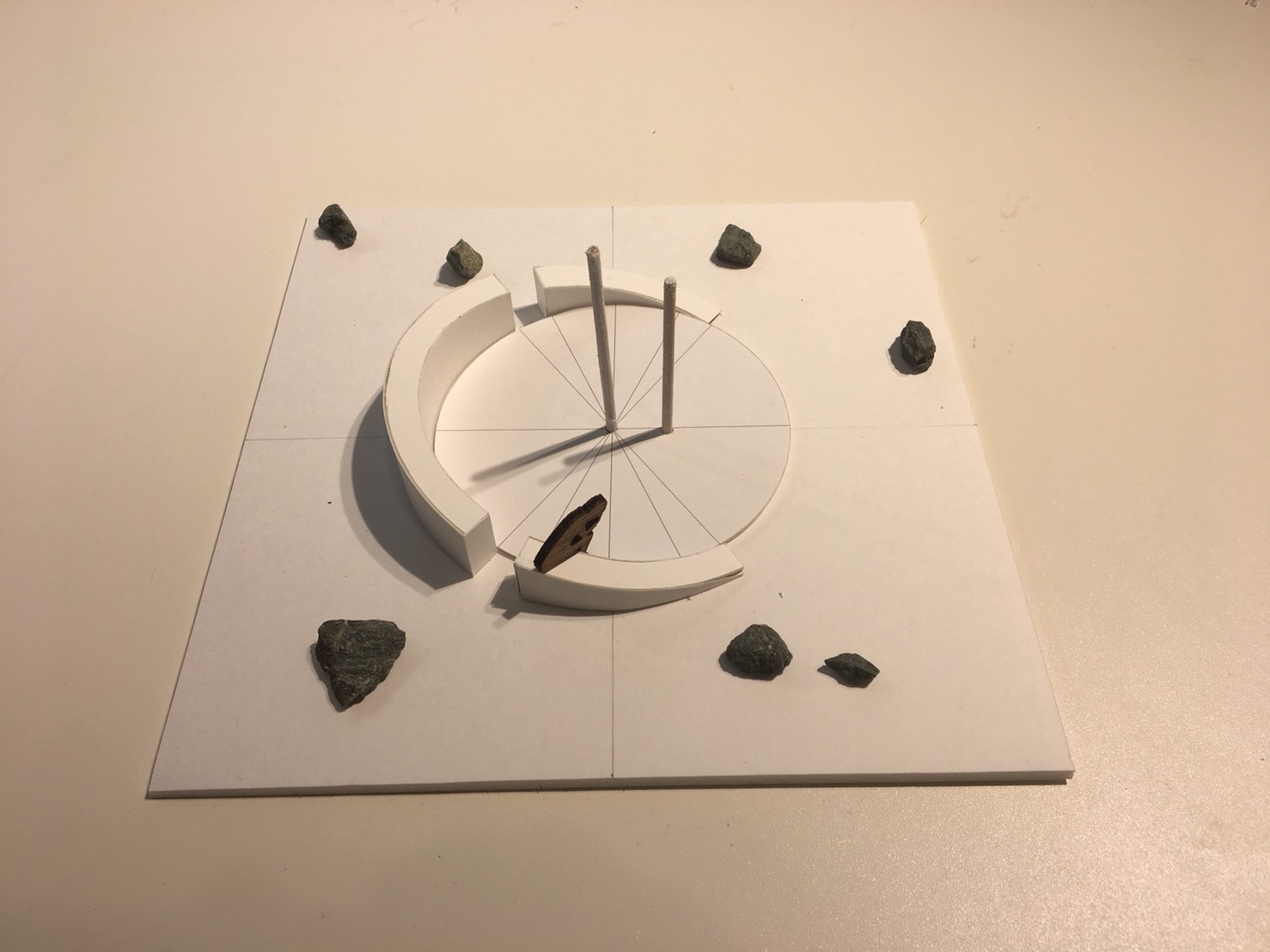
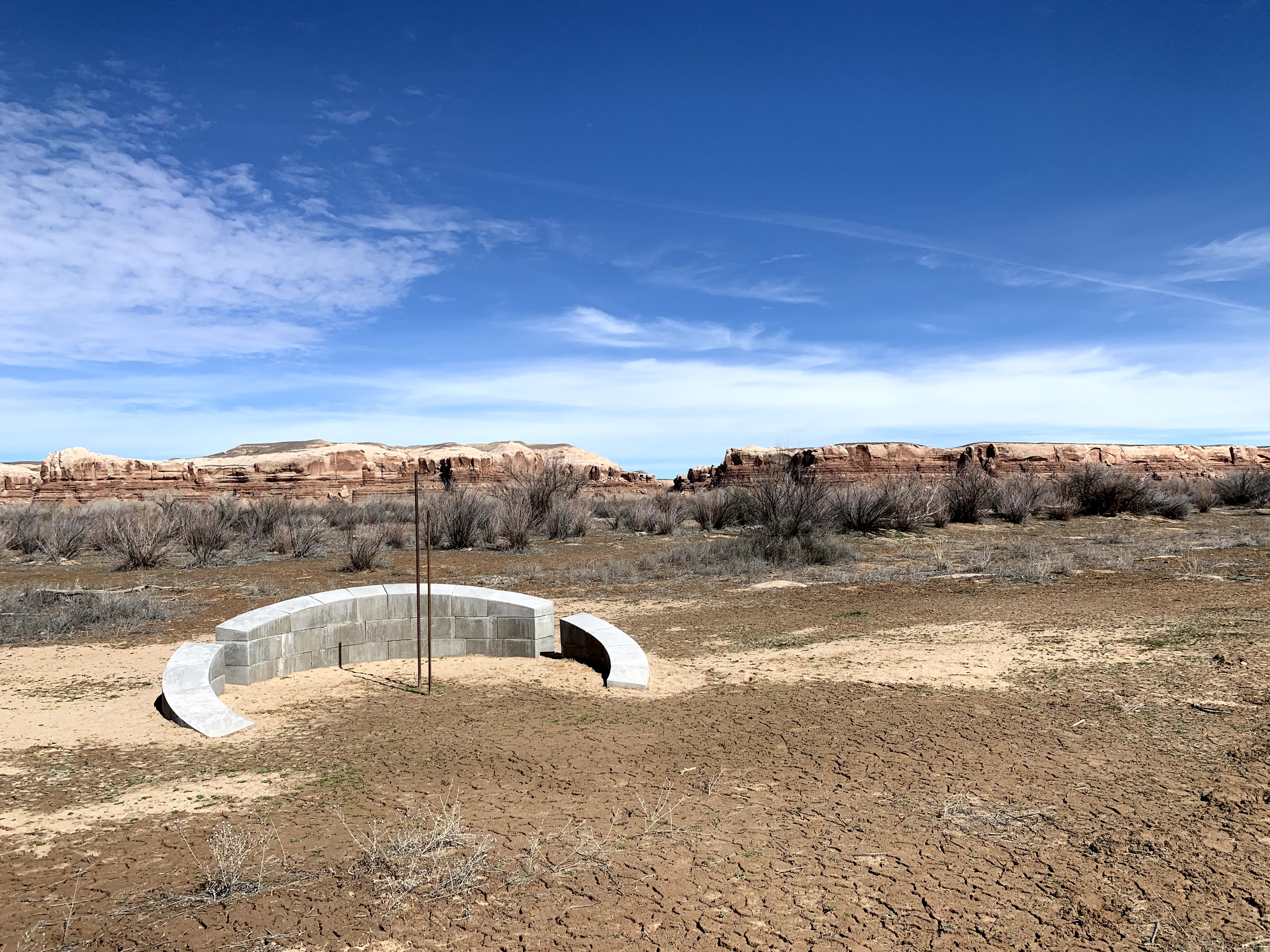
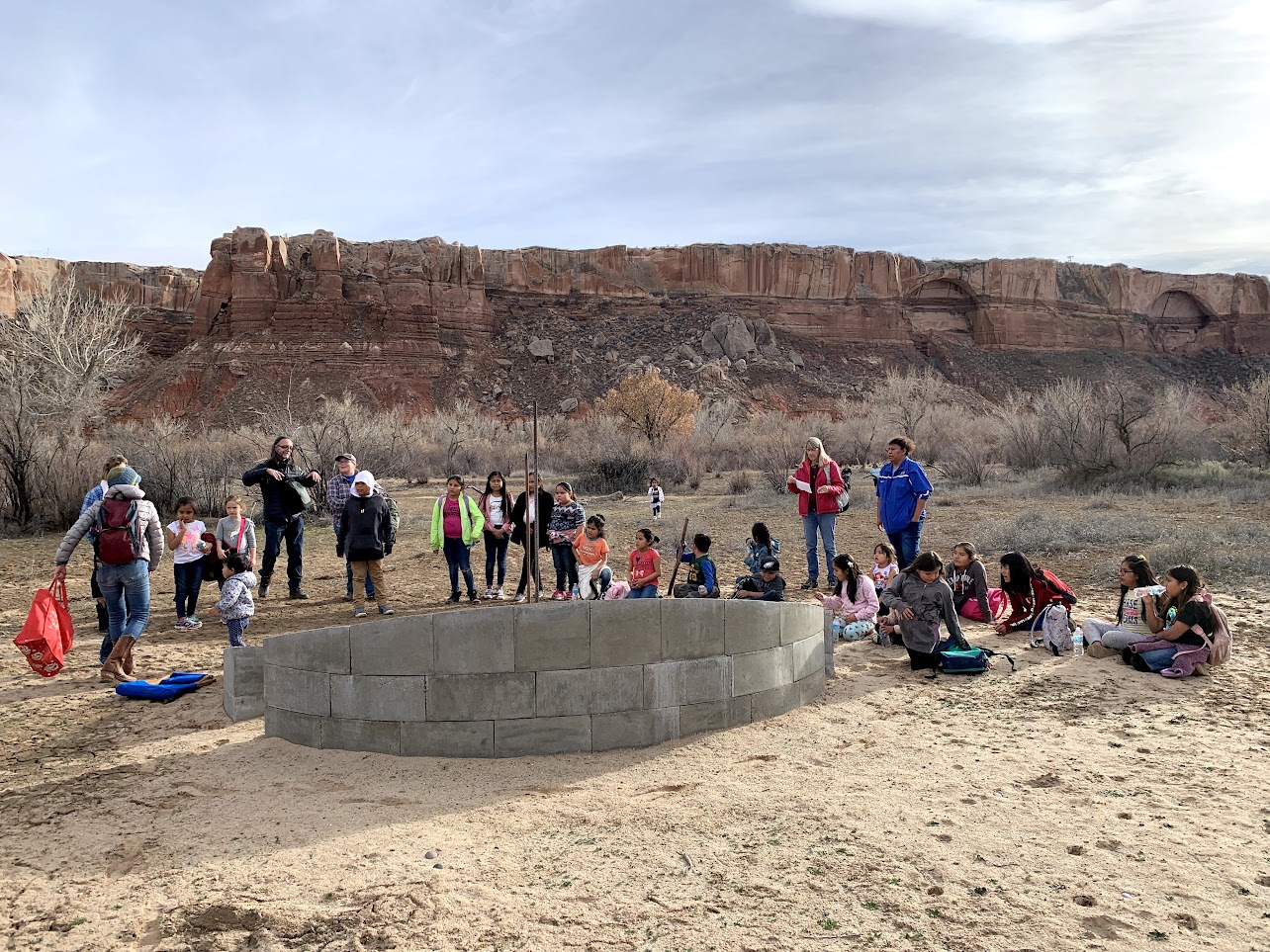
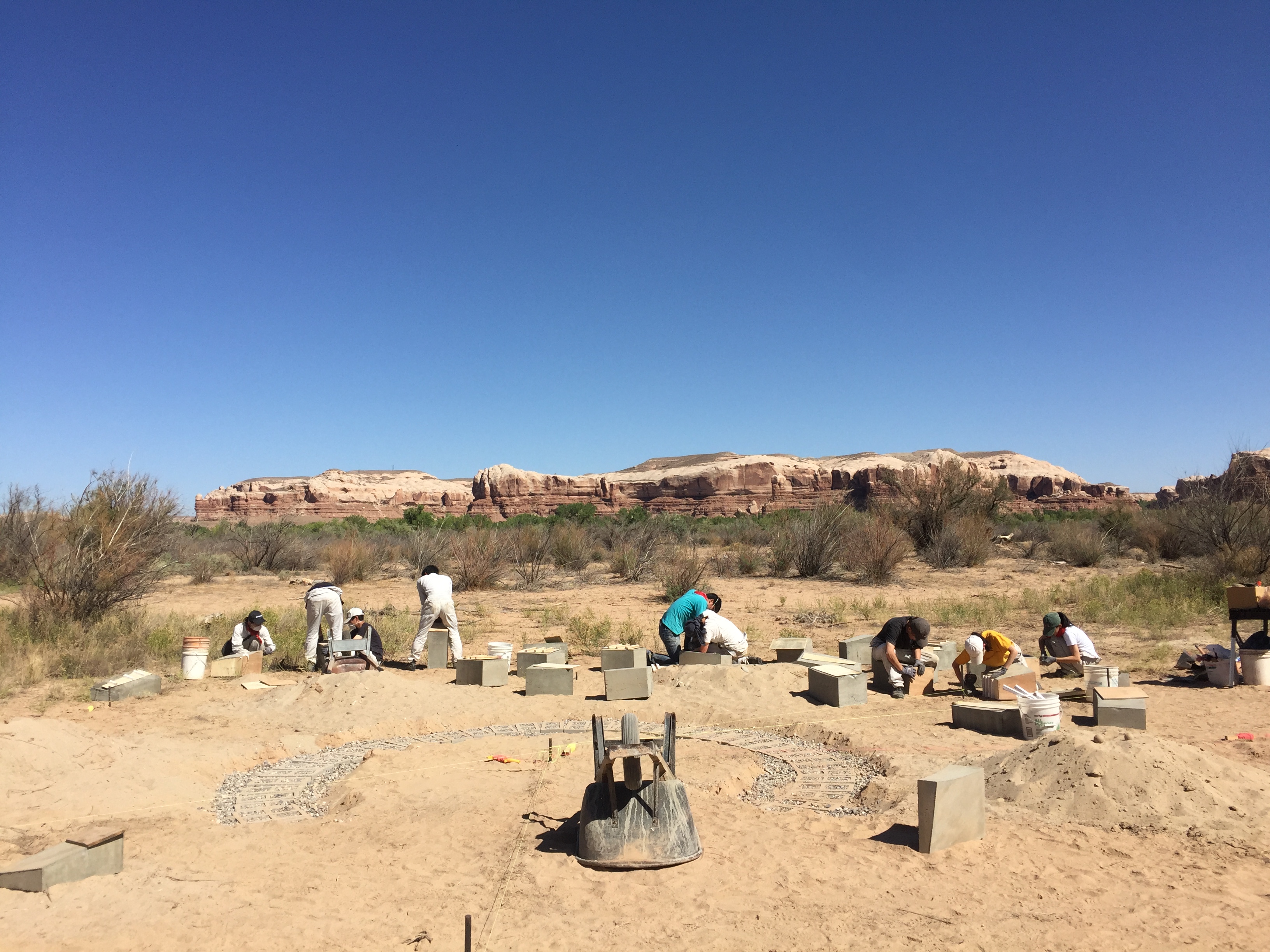
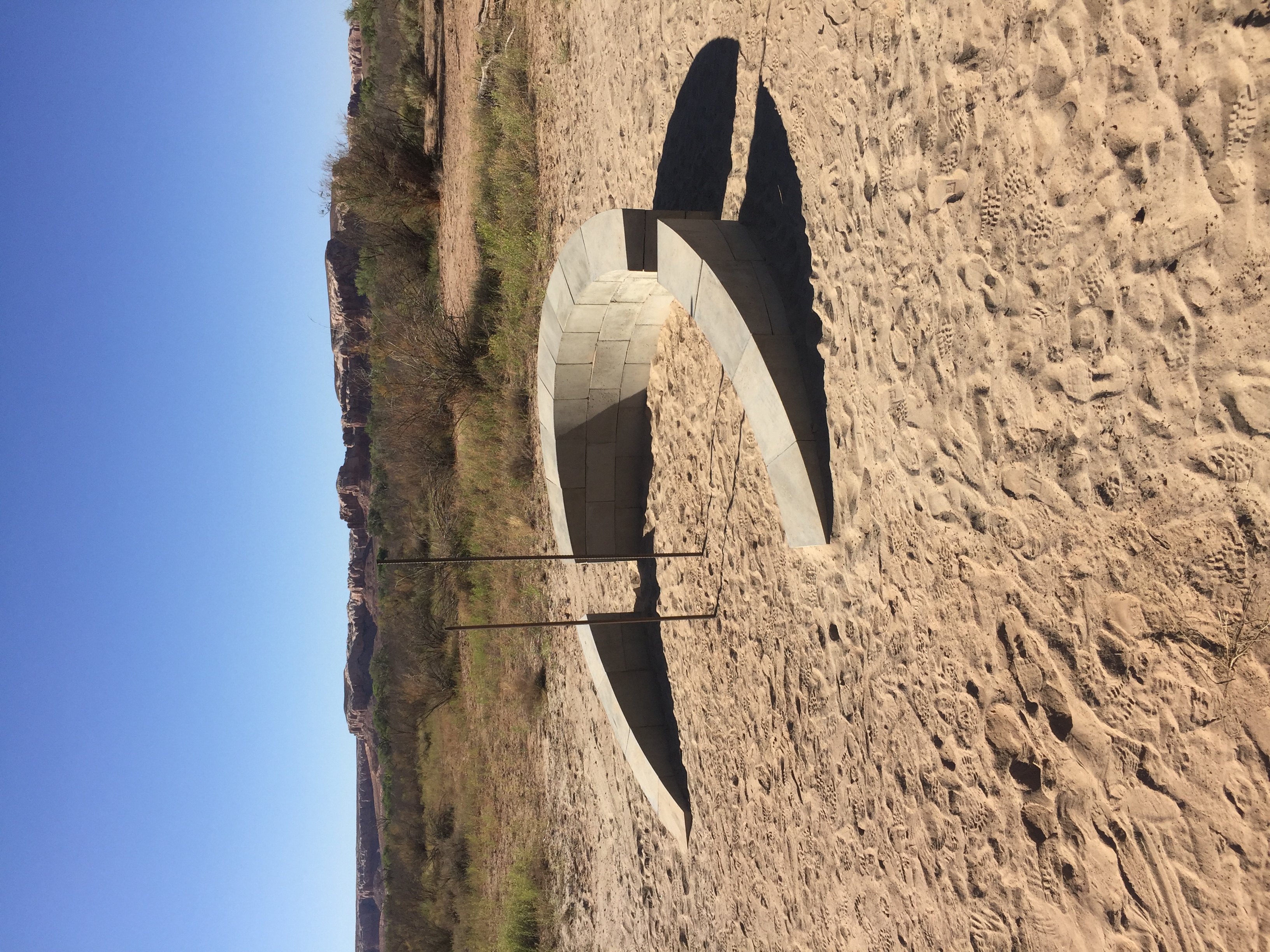
The Design Build Bluff program, in collaboration with the Spatial Design Studio at Tokyo Metropolitan University, would like to create a place for stargazing and a break space along the San Juan river.
This project was designed by students in Japan, and inspired by ancient Pueblo astronomy culture.
Chaco culture
For over 2,000 years, Pueblo peoples occupied a vast region of the south-western United States. Chaco Canyon, a major center of ancestral Pueblo culture between 850 and 1250, was a focus for ceremonials, trade and political activity for the prehistoric Four Corners area. Chaco is remarkable for its monumental public and ceremonial buildings and its distinctive architecture. We can see their history clearly in the grand scale of the architecture. Using masonry techniques unique for their time, they constructed massive stone buildings (Great Houses) of multiple stories containing hundreds of rooms much larger than any they had previously built. Construction on some of these buildings spanned decades and even centuries.
During the middle and late 800s, a lot of great houses were constructed. These structures were often oriented to solar, lunar, and cardinal directions. Lines of sight between the great houses allowed communication. Sophisticated astronomical markers, communication features, water control devices, and formal earthen mounds surrounded them.
Sun Dagger
High atop the imposing butte at the entrance of the Chaco canyon is the most famous of Chaco's sites. There, a set of spiral petroglyphs pecked into a cliff face behind three giant slabs of rock functions as a solar marker. At summer solstice, a vertical shaft of light pierces the main spiral exactly at its center. On the winter solstice, two shafts of light perfectly bracket the same spiral. Light shafts strike the center of a smaller spiral nearby on the spring and fall equinoxes.
Lunar Stand Still
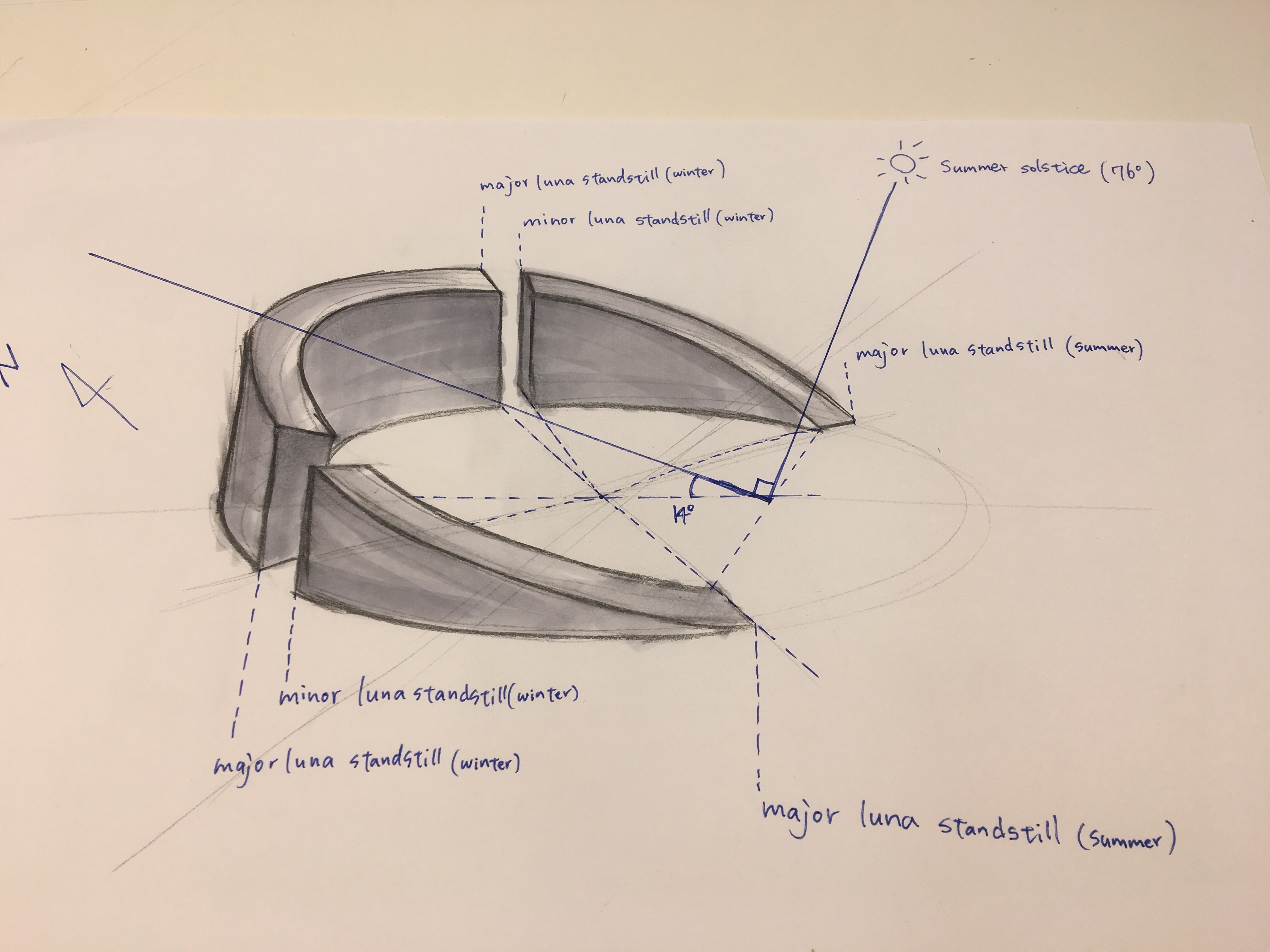
The lunar standstill is a moving position in space relative to the direction of Earth's axis and to the rotation of the Moon's orbital nodes (lunar nodal precession) once every 18.6 years. At a major lunar standstill, the Moon's range of declination, and consequently its range of azimuth at moonrise and moonset, reaches a maximum. On the other hand, at a minor lunar standstill, the Moon's range of declination, and consequently its range of azimuth at moonrise and moonset, reaches a minimum. Pueblo peoples used the azimuth of the moonrise at this phenomenon as an astronomical mark for their architecture.